Do you have questions about energy efficiency in hot tubs? Our team of experts at Lifestyle Outdoor are here to help.
Unfortunately, hot tubs have had a reputation for being electricity hogs, and many homeowners talk themselves out of buying one based on that assumption alone. The reality is more nuanced. Energy efficiency in hot tubs has advanced dramatically over the past decade, and a well-chosen, properly maintained spa can cost far less to run than most people expect.
This article breaks down exactly what drives hot tub energy usage, which features deliver real savings, and what you can do today, whether you own a spa already or are shopping for one, to keep your monthly bills under control.
Table of Contents
- Key takeaways
- Energy efficiency in hot tubs: what actually matters
- Real costs: standard vs. energy-efficient models
- Smart habits to reduce hot tub energy cost
- Comparing energy-efficient hot tub features and models
- Find your ideal energy-efficient spa at Lifestyleoutdoor
- FAQ
Key Takeaways About Energy Efficiency in Hot Tubs
| Point | Details |
|---|---|
| Insulation is the biggest lever | Full foam insulation with R-values of 16+ reduces heat loss by up to 70%, cutting energy use significantly. |
| Covers prevent most surface heat loss | High-quality covers stop up to 70% of heat escaping through the water surface. |
| Smart controls pay for themselves | Variable speed pumps and smart thermostats reduce energy use by an additional 10-15%. |
| Climate shapes your savings | Energy-efficient models use 40-50% less energy in cold climates where the payoff is greatest. |
| Higher upfront cost makes sense | Most owners recoup the premium cost of energy-efficient hot tubs within 3-5 years through lower bills. |
Energy Efficiency in Hot Tubs: What Actually Matters
Most people think “energy efficient” means one thing, like a sticker on a box. In practice, energy efficiency in hot tubs is a holistic integration of insulation, pump design, cover quality, and smart controls all working together. Miss one element and the others can’t fully compensate.
Insulation: The Thermal Foundation
The single biggest driver of heat retention is what’s inside the cabinet walls. Full polyurethane foam insulation fills every cavity, creating a seamless thermal barrier around the entire shell. Tubs built this way can achieve R-values of 16+, reducing heat loss by up to 70% compared to uninsulated or partially insulated models. Partial insulation, which coats only the shell or cabinet walls, leaves significant air gaps where heat escapes constantly.
Think of it like a well-insulated wall in your home versus a wall with just a thin vapor barrier. The difference in comfort and energy consumption is immediate and ongoing.
Pump Systems: Smarter Than You Think
Old-school hot tubs ran a single large pump for everything: filtration, jets, and circulation. That approach wastes energy because a massive pump runs at full power even when you just need gentle water movement. Modern systems separate these tasks.
Dual-pump systems pair a low-wattage circulation pump for continuous filtration with a dedicated jet pump that only fires when you want hydrotherapy. Dual-pump systems reduce energy consumption by 15-25% compared to single pump setups. Variable-speed pumps take this further by adjusting motor speed to match demand, running quietly and efficiently in the background.
Covers and Smart Controls
Your hot tub cover does more work than most people realize. High-quality covers with R-values of 16+ and tight perimeter seals prevent up to 70% of heat loss through the water surface. The water surface is always warm and always radiating heat upward. A cover stops that waste.
Smart thermostats and programmable controls add another layer of savings. These systems learn your schedule and reduce energy use by an additional 10-15% by heating the water right before you use it rather than holding it at full temperature around the clock.
Pro Tip: If your cover feels heavier than it did when you bought it, it has likely absorbed water and lost most of its insulating value. A waterlogged cover can account for a 30-40% spike in heating costs.
| Feature | Standard hot tub | Energy-efficient hot tub |
|---|---|---|
| Cabinet insulation | Partial or none | Full foam, R-16+ |
| Pump type | Single pump | Dual pump or variable speed |
| Cover R-value | R-6 to R-10 | R-16 or higher |
| Smart controls | Manual thermostat | Programmable or app-based |
| Monthly energy cost | $20-$60 | $10-$20 |
Real Costs: Standard vs. Energy-Efficient Models
Numbers make the decision real when considering energy efficiency in hot tubs. Energy-efficient hot tubs reduce monthly electricity costs from the $20-$60 range for standard models down to $10-$20. Over a full year, that gap translates to $100-$400 in savings depending on where you live and what your utility charges per kilowatt hour.
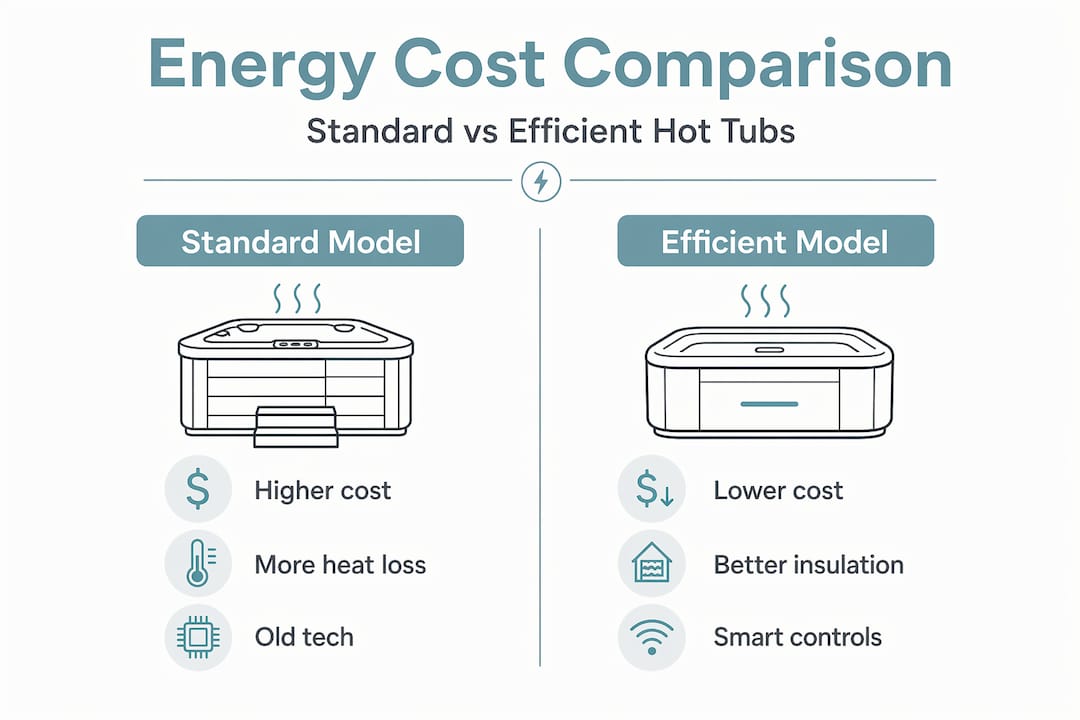
Regional electricity rates change the math considerably. In high-cost areas like California or New York, annual savings can reach $250-$400. In moderate-cost regions, expect to save $150-$250 per year. Even in low-cost utility zones, the annual benefit sits at $75-$150. These figures assume you are also running the spa correctly, which the next section covers in detail.
Climate has a direct effect on hot tub energy usage as well. In warm Southern California winters, an energy-efficient spa uses 30-40% less energy than a standard model. Move to a moderate climate with genuine cold seasons and energy-efficient models use 35-45% less energy. In cold northern climates where the spa has to fight freezing air temperatures, the gap widens to 40-50%. That means the colder your winters, the more that prioritized energy efficiency in hot tubs can save you.
| Climate zone | Standard model monthly cost | Efficient model monthly cost | Annual savings |
|---|---|---|---|
| Warm (e.g. Southern California) | $20-$30 | $12-$18 | $75-$150 |
| Moderate (e.g. Pacific Northwest) | $35-$50 | $20-$30 | $150-$250 |
| Cold (e.g. Midwest, Northeast) | $50-$65 | $28-$38 | $250-$400 |
One feature that often surprises buyers is lighting. LED lighting reduces illumination energy consumption by up to 80% compared to incandescent bulbs. On its own, this isn’t a game changer for your electric bill since heating dominates consumption. But every watt adds up, and LED systems are now standard on most quality spas.
Smart Habits to Reduce Hot Tub Energy Cost
Owning an energy-efficient hot tub is step one. Using it wisely is step two. These are the habits that separate homeowners who see the savings from those who don’t.
Set the Right Temperature
The ideal hot tub temperature for most users is between 100°F and 102°F. Every degree you raise the thermostat above that costs measurably more to maintain. If you soak at 104°F every day, consider whether 101°F would feel just as good, because the difference in heating load over a year is real.
Use Programmable Heat Schedules
Most modern spas let you set “economy mode” during hours you won’t soak. The spa holds a lower standby temperature and heats up to your target temperature before your scheduled soak time. This alone can shave 10-15% off your monthly bill.
Maintain Your Cover Religeously
Inspect the foam core every few months. If you notice sagging, cracking, or that telltale waterlogged weight, watch for signs you need a new cover before the energy waste compounds. A degraded cover turns even the most insulated spa into an open radiator.
Schedule Filtration Cycles Off Peak
Most utility companies charge lower rates during overnight hours. Program your filtration cycles to run between 10 PM and 6 AM and you will pay less per cycle without sacrificing water quality.
Protect Your Spa From Wind
Cold wind strips heat from the cabinet and cover surface faster than still air does. A fence, landscaping, or a pergola on the windward side can make a genuine dent in your heating bill during winter months. This is especially true in open yards with no natural windbreak.
Check Your Insulation Annually
Inspect the cabinet panels for gaps, cracks, or areas where the foam may have compressed or deteriorated. If you live in a cold climate, proper installation placement against a sheltered wall or inside a gazebo makes a significant difference.
Pro Tip: Lowering your hot tub temperature by just 2°F when you know you won’t use it for several days, like during a vacation, can save a meaningful amount of energy without stressing the system on reheat.
Comparing Energy-Efficient Hot Tub Features and Models
Not all “energy efficient” claims are created equal. Here is what to actually look for when comparing models. Especially when prioritizing energy efficiency in hot tubs!
Insulation Approaches
Full foam insulation fills the entire interior cavity of the hot tub cabinet. Every pipe, fitting, and shell surface is surrounded by polyurethane foam. This is the gold standard. Partial insulation strategies coat only the shell or line only the interior of the cabinet, leaving air gaps that allow convective heat loss at night.
Some manufacturers advertise “reflective barrier” insulation, which works in combination with air space. It can be effective, but it rarely matches the thermal retention of true full foam at R-16 or above.
Pump Technology
- Variable-speed pumps adjust motor output to match demand, consuming minimal electricity during filtration cycles and full power only during jet use.
- Dedicated circulation pumps run 24/7 but at very low wattage (typically 50-100 watts), keeping water clean and warm without the energy draw of a full jet pump.
- Two-speed pumps offer a compromise, running at low speed for circulation and high speed for jets, though they are less efficient than true variable-speed options.
Heating Elements and Certifications
Titanium heating elements resist corrosion and maintain heating efficiency longer than stainless steel alternatives. Heat recovery systems, found in premium models, capture heat from pump motors and return it to the water rather than venting it as waste.
Hot Spring Spas are recognized for integrating these technologies into a cohesive system, including full foam insulation, dedicated circulation pumps, and app-based smart controls. Some models from leading brands carry third-party energy certifications that verify real-world performance rather than just theoretical specs.
You can also explore eco-friendly spa options that combine energy savings with sustainable materials and low-impact manufacturing practices, if that aligns with your priorities.
Find Your Ideal Energy-Efficient Spa at Lifestyle Outdoor
If this article about energy efficiency in hot tubs has you rethinking your current setup or planning your first purchase, Lifestyle Outdoor makes it straightforward to find a spa that fits both your lifestyle and your energy goals.
At Lifestyle Outdoor, you’ll find a curated selection of energy-efficient hot tubs for sale from top brands, all in one place. The team can walk you through insulation ratings, pump configurations, and smart control options so you choose a model that performs well for your climate and usage patterns.
Stop by a Lifestyle Outdoor showroom or browse online to explore the full range and take the next step toward a more relaxing and cost-efficient backyard retreat.
FAQ
How much can I save with an energy-efficient hot tub?
Most owners save between $100 and $400 per year compared to running a standard model, depending on local electricity rates and climate. High-cost utility areas see the greatest annual savings.
What is the best hot tub insulation type?
Full polyurethane foam insulation with an R-value of 16 or higher delivers the best thermal retention, reducing heat loss by up to 70% compared to partial insulation methods.
What temperature should I keep my hot tub at to save energy?
Setting your hot tub between 100°F and 102°F balances comfort with efficiency. Using economy mode during unused hours reduces heating load significantly without sacrificing the experience when you do soak.
Do hot tub covers really make a difference?
Yes, significantly. A quality cover with a tight seal prevents up to 70% of heat loss through the water surface. A waterlogged or damaged cover can dramatically increase your monthly heating costs.
How long before an energy-efficient hot tub pays for itself?
Most owners see their higher upfront investment returned within 3-5 years through consistent monthly energy savings, with the spa continuing to deliver cost benefits well beyond that point.