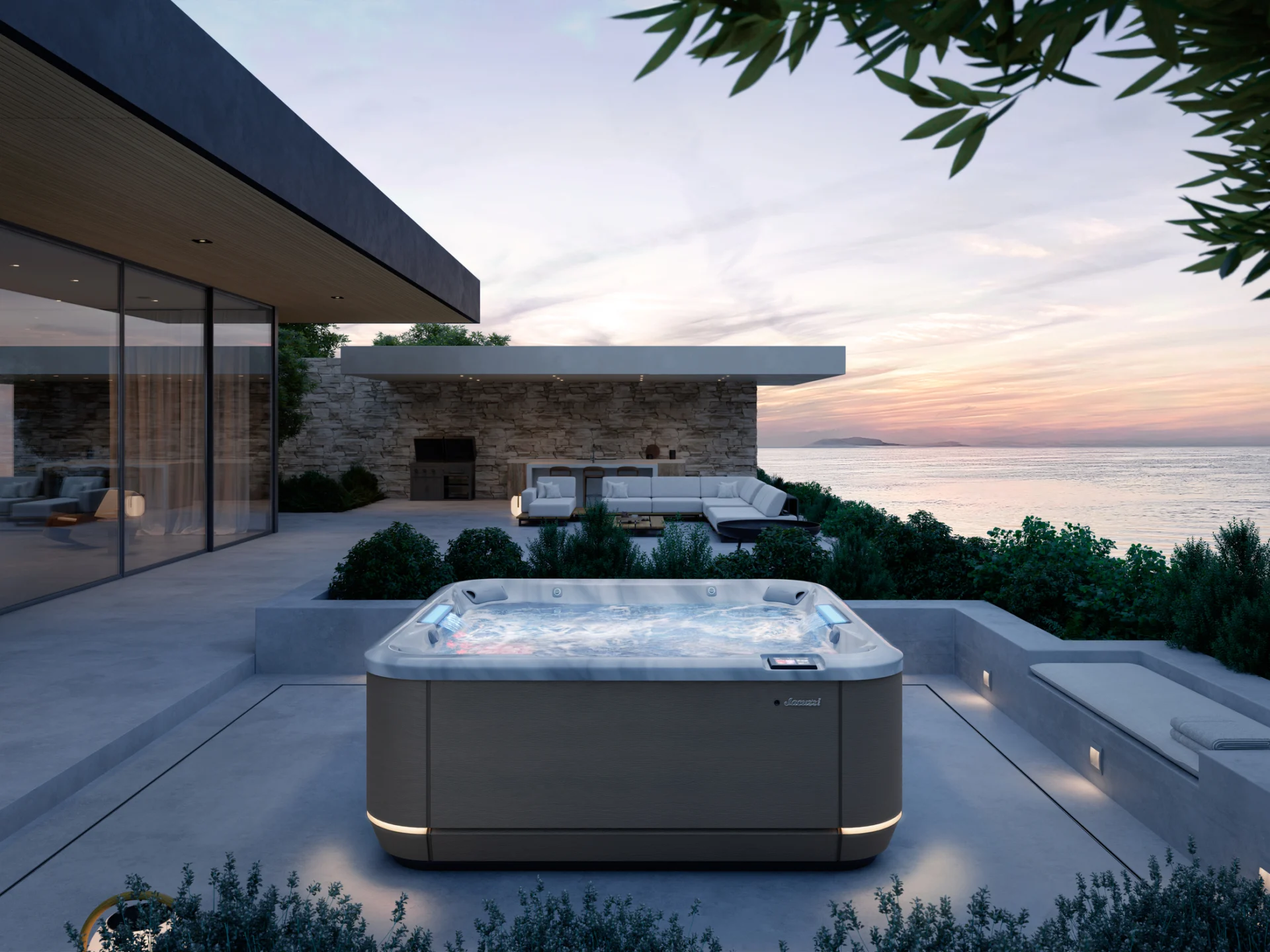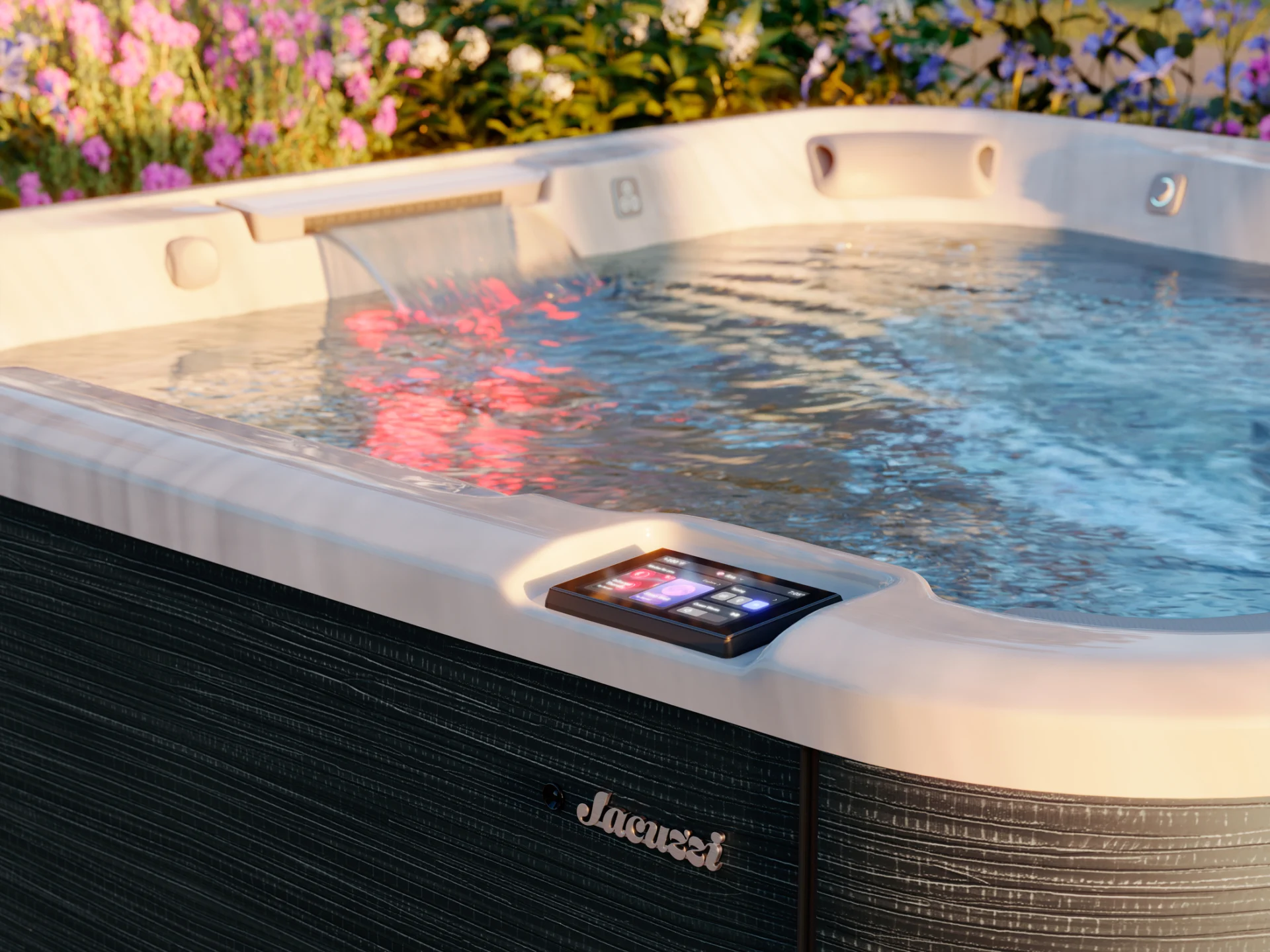
If you’ve been wondering what are smart hot tubs and whether they’re worth the investment, you’re asking the right question at the right time. A smart hot tub is a spa that connects to your home Wi-Fi or cellular network, letting you control temperature, monitor water quality, and manage energy use from your phone. The global hot tub market is valued at USD 5.70 billion in 2025 and growing, and smart connectivity is a major force behind that trend. Here’s everything you need to know before you buy, upgrade, or simply satisfy your curiosity.
Table of Contents
- Key takeaways
- What is a smart hot tub and how does it work?
- Key smart hot tub features to know
- Benefits of smart hot tubs: health, convenience, and savings
- Factory-built vs. retrofit smart hot tubs
- Practical tips for owning a smart hot tub
- My honest take on smart hot tubs
- Explore smart hot tubs at Lifestyle Outdoor
- FAQ
Key takeaways
| Point | Details |
|---|---|
| Smart hot tubs use app control | You can adjust temperature, schedule soaks, and monitor water quality from your smartphone. |
| Retrofit options exist | You don’t need to buy a new tub to go smart. Controllers can upgrade an existing spa affordably. |
| Insulation matters most | Smart features add convenience, but cover and insulation quality determine your real energy savings. |
| Health benefits are real | Smart scheduling and hydrotherapy access make regular, therapeutic soaking far more consistent. |
| Future utility costs may rise | Smart meter trials in some regions could affect water costs for hot tub owners. |
What is a smart hot tub and how does it work?
At its core, a smart hot tub is a standard spa equipped with internet connectivity and intelligent automation. Think of it as giving your hot tub a brain. Instead of walking outside to twist a dial or punch a button panel in the cold, you open an app and manage everything from the couch, the office, or a thousand miles away.
Smart hot tubs rely on three core components working together: a controller module built into or added to the spa, a network connection (Wi-Fi or cellular), and a companion app on your smartphone or tablet. These three pieces allow remote scheduling, temperature adjustment, water condition monitoring, and energy management without any manual input at the tub itself.
Here’s what that looks like in practice:
- Remote temperature control: Preheat your tub on the way home from work so it’s ready the moment you arrive.
- Scheduling: Set the tub to heat only during off-peak electricity hours, then cool into an eco mode overnight.
- Water condition monitoring: Sensors track pH, sanitizer levels, and water clarity in real time, alerting you when action is needed.
- Maintenance alerts: Get push notifications when filters need cleaning or chemical levels drift out of range.
- Usage tracking: Review how long and how often you use the tub to optimize energy habits.
There’s also an important distinction worth understanding: factory-built smart hot tubs versus retrofit smart controllers. Factory-built models come with all the connectivity hardware integrated from day one. Retrofit systems, on the other hand, are external controller units you connect to an existing spa. Both can deliver real smart functionality. The right choice depends on whether you’re starting fresh or upgrading what you already own.
Pro Tip: If you already own a quality hot tub and love it, a retrofit controller is often the smarter financial move before exploring a full replacement.
Key smart hot tub features to know
Not every smart hot tub is created equal, and the feature gap between entry-level and premium models is significant. Here’s a ranked look at what to prioritize when comparing options.
App-based temperature and schedule control. This is table stakes for any smart hot tub. Major brands offer apps that let owners set temperatures, build weekly schedules, and receive maintenance alerts. Look for apps that work on both iOS and Android with a reliable track record of updates.
Automatic water chemistry management. Smart hot tubs can feature automatic pH and water sensors that adjust chemical treatments continuously without you ever testing a strip. This is one of the biggest quality-of-life upgrades a smart spa offers, particularly for owners who hate the chemistry guesswork.
Energy-saving modes and usage analytics. Eco mode, sleep mode, and programmable heating windows let the tub minimize energy draw during expensive rate hours. Over a full year, this scheduling discipline adds up to meaningful savings on your utility bill.
Smart home integration. Many premium smart hot tubs integrate with Alexa or Google Assistant for voice control and home automation routines. Imagine saying “Alexa, start my spa” as you walk in the door, and stepping in 20 minutes later to a perfectly heated tub.
Ambient features: lighting, sound, and waterfalls. App-controlled LED lighting, Bluetooth sound systems, and programmable waterfall features let you customize the atmosphere without touching the tub. These are more about experience than efficiency, but they’re genuinely enjoyable.
Pro Tip: Focus your comparison on categories 1 through 3 first. Categories 4 and 5 are delightful extras, but they won’t affect your satisfaction on a cold Tuesday night as much as reliable temperature control and clean water will.
Benefits of smart hot tubs: health, convenience, and savings
The benefits of smart hot tubs go well beyond the novelty of controlling your spa from your phone. They touch on three things homeowners care about most: feeling better, saving time, and spending less money over the long haul.
Hydrotherapy made consistent. The biggest health barrier to hot tub ownership is actually using the tub. When it takes 45 minutes to heat up and you have to plan ahead, you soak less. Smart scheduling eliminates that friction. Regular hydrotherapy has well-documented benefits for muscle recovery, joint pain, stress relief, and sleep quality, and smart tubs make it realistic to soak three or four nights a week instead of three or four times a month.
Effortless water safety. Integrated water chemistry sensors that automatically adjust pH and sanitizer levels reduce the risk of skin irritation and bacterial growth without daily manual testing. This is not just convenient. It’s genuinely safer.
Real energy savings, with an asterisk. Smart automation can meaningfully cut your electricity costs by heating the tub only when needed. However, energy efficiency depends more on insulation quality, pump efficiency, and cover condition than it does on app features alone. The app helps you optimize a well-built tub. It cannot compensate for a poorly insulated one.
Lower maintenance burden. App notifications for filter changes, chemical imbalances, and service intervals mean you catch problems early, before they become expensive repairs.
“Smart scheduling and automatic water management turn a hot tub from an occasional luxury into a reliable part of your daily wellness routine.”
One forward-looking consideration: smart meter trials in some regions are exploring premium water rates for heavy leisure water users, including hot tub owners. Owning a smart tub with usage tracking puts you in a better position to monitor and manage that exposure before billing changes arrive.
Factory-built vs. retrofit smart hot tubs
Choosing between a brand-new smart hot tub and adding a retrofit controller to an existing spa is a genuinely interesting decision, and the answer isn’t always obvious.
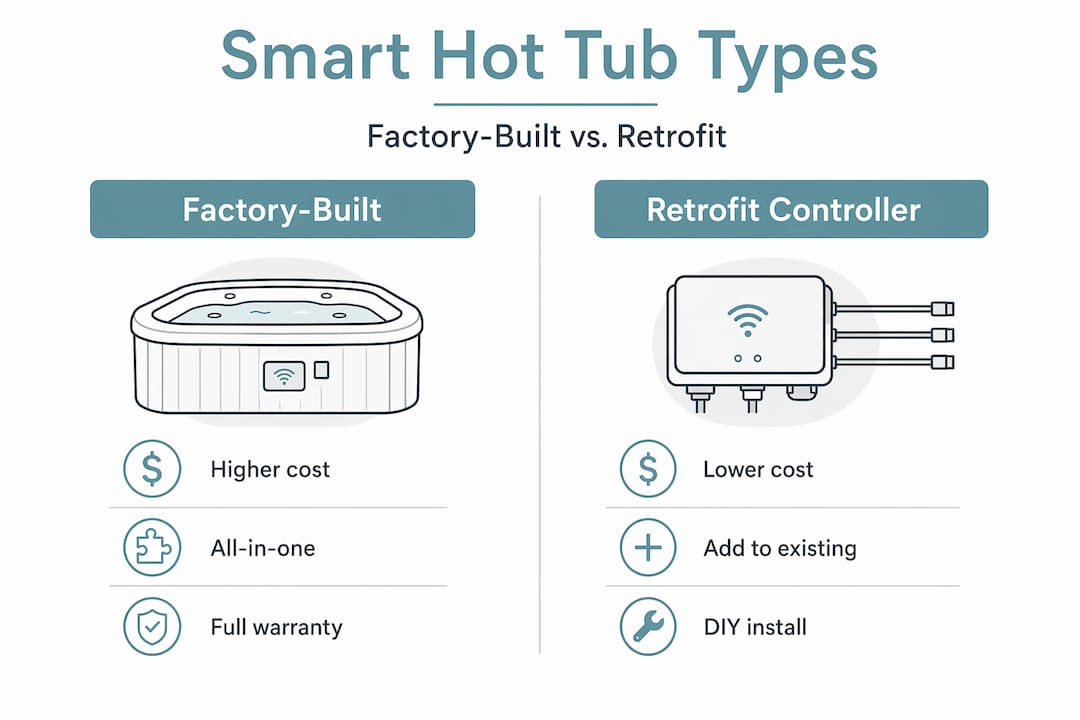
| Feature | Factory-built smart hot tub | Retrofit smart controller |
|---|---|---|
| Upfront cost | Higher (full spa purchase) | Lower (controller only) |
| Smart integration | Fully native, seamless | Compatible with most existing spas |
| Installation disruption | Significant (new installation) | Minimal, often plug-and-play |
| Warranty impact | Full manufacturer warranty | Non-destructive upgrade, typically no warranty void |
| Feature depth | Maximum, fully integrated | Core smart features: temperature, scheduling, alerts |
| Best for | New buyers, full replacement | Existing tub owners wanting connectivity |
Plug-and-play hot tubs and retrofit controllers both offer easier entry points than hardwired installations, though they may deliver less power and heating speed. If your current tub is mechanically sound and well-insulated, a retrofit system is often the most cost-effective path to smart connectivity.
Retrofit smart controllers connect to your existing spa hardware to enable remote monitoring without requiring major modifications or voiding your warranty. For homeowners who already invested in a quality tub, this is a genuinely compelling option rather than a compromise.
Practical tips for owning a smart hot tub
Getting the most from your smart hot tub is about building good habits around the technology, not just buying the right hardware.
- Set a heating schedule and stick to it. Program your tub to reach your preferred temperature 30 to 45 minutes before your typical soak time. This eliminates waiting and prevents the tub from running at full temperature for hours when you’re not home.
- Use eco mode aggressively. Most smart hot tubs have an eco or sleep mode that drops temperature during off-hours. Combined with a good quality cover, this can significantly reduce heat loss overnight and trim your monthly energy bill.
- Act on maintenance alerts immediately. App notifications for pH drift or low sanitizer aren’t suggestions. Catching chemical imbalances early prevents equipment damage and keeps water safe.
- Review usage data monthly. Your app’s usage dashboard tells you when the tub runs hardest and when it sits idle. Use that information to refine your schedule and reduce unnecessary heating cycles.
- Monitor water consumption. Given the possibility of tiered water rates for heavy users in some markets, tracking your water fills through your smart system gives you early visibility into potential cost changes.
Pro Tip: Your smart hot tub’s app is only as useful as the Wi-Fi signal reaching your backyard. Before installation, check your router’s outdoor coverage or invest in a mesh network extender to avoid connectivity gaps that frustrate remote control.
Explore smart hot tubs at Lifestyle Outdoor
If this guide has you ready to take the next step, Lifestyle Outdoor makes it easy to find the right fit for your backyard and your lifestyle.
At Lifestyle Outdoor, you’ll find a curated selection of premium hot tubs for sale from top brands including Jacuzzi®, Caldera®, Hot Spring®, and Fantasy Spas®, many featuring built-in smart connectivity and app control. If you already own a spa, explore smart spa technology options that can bring your existing tub into the connected age without a full replacement. From showroom visits to installation support and financing options, Lifestyle Outdoor is here to help you find your personal outdoor retreat. Visit our hot tubs collection to browse models and get personalized guidance from our team.
FAQ
What is a smart hot tub?
A smart hot tub is a spa with internet connectivity (Wi-Fi or cellular) that you control remotely through a smartphone app. It allows temperature adjustments, scheduling, water monitoring, and energy management from anywhere.
How do smart hot tubs work?
Smart hot tubs use a controller module, a network connection, and a companion app to communicate between your phone and the spa. You send commands through the app, and the controller executes them on the tub’s hardware.
Can I make my existing hot tub smart?
Yes. Retrofit smart controllers connect to most existing spa hardware to add remote control and monitoring without voiding your warranty or requiring major modifications.
What features should I look for in a smart hot tub?
Prioritize app-based temperature control, automatic water chemistry monitoring, energy-saving scheduling modes, and smart home integration (Alexa or Google Assistant). Ambient features like lighting and sound are enjoyable additions.
Are smart hot tubs energy efficient?
Smart scheduling and eco modes help reduce energy use, but long-term efficiency depends more on cover quality and insulation than on app features. A well-insulated tub with smart automation delivers the best results.