Most people see a home spa and think “luxury.” That instinct is understandable, but it misses the bigger picture. If you understand why invest in home spa features the way researchers and real estate experts now do, you start to see something different. A well-chosen spa is a health tool, a stress management system, and in many cases, a genuine financial asset. The evidence behind regular spa use is substantial, the cost spectrum is wider than most expect, and the benefits compound over time in ways that a gym membership simply cannot match.
Table of Contents
- Key takeaways
- Why invest in home spa: the health case
- The real financial picture
- Choosing the right home spa
- Integrating your home spa into your space
- My honest take after working with homeowners
- Explore home spa solutions at Lifestyle Outdoor
- FAQ
Key takeaways
| Point | Details |
|---|---|
| Health benefits are proven | Frequent sauna and hot tub use links directly to lower cardiovascular risk and better sleep. |
| Costs vary widely | Home spa options range from under $1,000 to luxury builds over $10,000, fitting many budgets. |
| Property value increases | A well-installed spa can add 10% to 25% in perceived home value for the right property. |
| Feature matching matters | Choosing spa features aligned to your wellness goals prevents overspending and maximizes results. |
| Consistency drives ROI | Regular use, not occasional sessions, is what produces measurable health and financial returns. |
Why invest in home spa: the health case
The conversation about home spas usually starts with relaxation, but science pushes it much further. The most compelling data comes from Finnish sauna research, where frequent sauna use four to seven times weekly is associated with a 40% lower risk of all-cause mortality compared to once-weekly users. That is a remarkable finding from a cohort tracked over roughly 20 years, not a short-term wellness trend.
What explains those numbers? Thermal exposure triggers a cascade of physiological responses. Your body produces heat shock proteins and increases nitric oxide production, both of which support vascular flexibility and reduce systemic inflammation. The cardiovascular load during a sauna session is genuinely comparable to moderate-intensity exercise, with measurable increases in heart rate and adaptations in vascular tone.
Beyond cardiovascular health, the benefits of home spa use extend into areas most people feel every day.
- Muscle recovery: Massage jets and hydrotherapy components reduce delayed onset muscle soreness more effectively than stretching or passive heat alone. If you train regularly, this matters.
- Sleep improvement: Thermal bathing raises core body temperature, and the subsequent drop after exiting the spa signals the body to shift toward sleep. Many regular users report falling asleep faster and sleeping more deeply.
- Stress and cortisol reduction: The combination of heat, buoyancy, and massage jet stimulation reduces cortisol levels and activates the parasympathetic nervous system, the body’s rest-and-digest state.
- Chronic pain relief: Hot water immersion and targeted jet therapy have consistent evidence for reducing joint stiffness and muscle tension associated with arthritis and chronic back pain.
The dose and schedule matter. A 2026 MDPI review analyzing 28 studies confirmed that benefits are dose-dependent, meaning frequency, temperature, and session duration all influence outcomes. Occasional use feels good but does not produce the measurable systemic changes that consistent practice does.
“Health benefits from home spas depend on dose and consistent use rather than occasional enjoyment; investing in a model you use regularly yields better ROI for health.”
Pro Tip: Aim for sessions of 15 to 20 minutes at 80 to 100°C with a cooling period between rounds, following standard protocols shown in Finnish research. Stay hydrated and keep a consistent weekly schedule to unlock long-term benefits.
The real financial picture
Home spa investment advantages are more accessible than most people realize. The price spectrum stretches from portable infrared saunas under $1,000 to full outdoor hot tubs in the $5,000 to $12,000 range, with custom luxury installations going well beyond that. According to 2026 Realtor.com guidance, the full spectrum runs from under $1,000 for portable saunas to $10,000 or more for premium setups.
Here is a practical overview of the investment levels you can expect:
| Spa type | Approximate cost range | Best suited for |
|---|---|---|
| Portable infrared sauna | $800 to $2,500 | Solo users, small spaces, budget-conscious buyers |
| Barrel or outdoor sauna | $3,000 to $7,000 | Families, backyard installations, traditional heat lovers |
| Plug-and-play hot tub | $3,500 to $6,000 | Couples and small families seeking hydrotherapy |
| Full-featured hot tub | $7,000 to $15,000 | Regular users wanting massage jets and smart controls |
| Swim spa | $12,000 to $30,000 | Fitness-focused buyers wanting both exercise and relaxation |
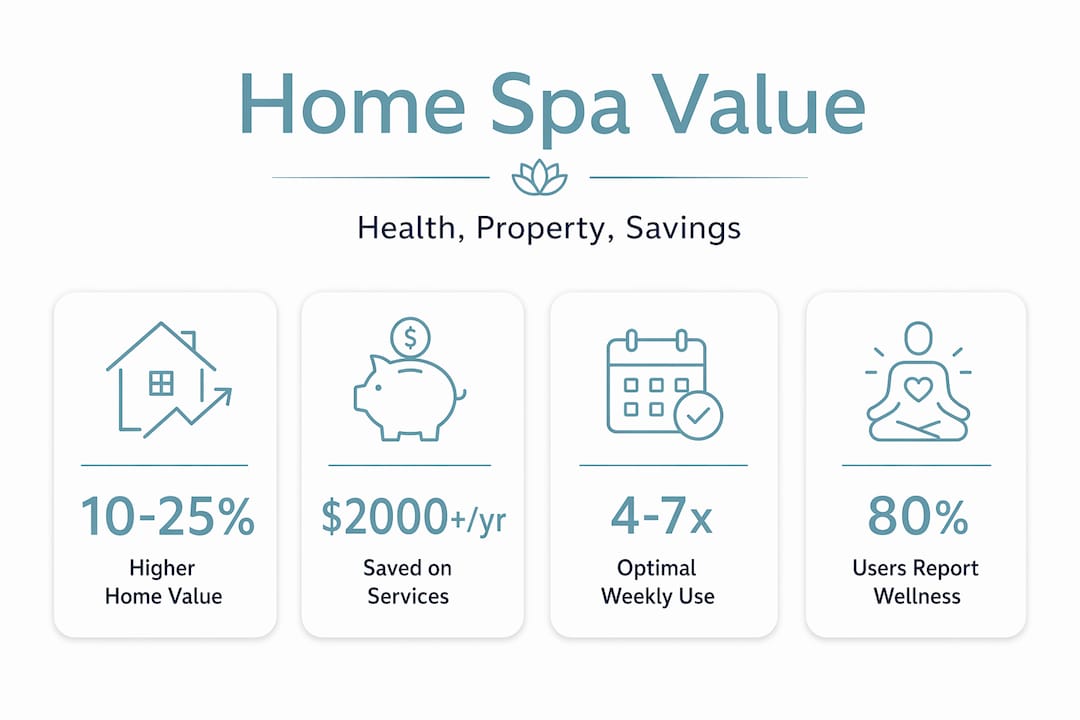
The property value angle is real but conditional. A well-integrated spa can increase perceived home value by 10% to 25% in markets where wellness amenities are desirable. That said, the return depends on your home’s price point and the quality of the installation. A $4,000 barrel sauna does not add $50,000 to a modest home, but it absolutely differentiates your property for the right buyer.
There is also a practical cost-savings dimension that gets overlooked. When you add up regular spa memberships, massage therapy appointments, and gym access fees, many households spend $150 to $400 per month on wellness services. A home spa eliminates much of that recurring cost over its lifespan, often paying for itself in avoided fees within five to seven years.
Pro Tip: Align your spa investment with your home’s overall market value. A general rule: keep the spa budget at roughly 5% to 10% of your home’s value to maximize resale appeal without overcapitalizing.
Choosing the right home spa
Not all spa types deliver the same results, and matching spa features to your specific wellness goals is where you protect your investment. The home spa cost savings and health gains you actually experience depend almost entirely on how well the product fits your routine.
Here is how the main categories break down:
- Hot tubs: The strongest all-around choice for stress relief, sleep improvement, and social enjoyment. Massage jets provide targeted hydrotherapy, and models like Hot Spring Spas are designed specifically for consistent therapeutic use. Learn more about the hot tub health benefits when used regularly at home.
- Saunas: The gold standard for cardiovascular health and respiratory benefits based on the Finnish research. If longevity and heart health are your primary goals, a sauna is the most evidence-backed option. You can explore sauna models for home use in both indoor and outdoor configurations.
- Swim spas: The right fit if you want to combine exercise with recovery. They function as compact lap pools with built-in resistance and jet massage zones, making them a dual-purpose investment for fitness-focused households.
- Cold plunges: Increasingly popular for post-workout recovery and mental resilience training. The evidence on cold water immersion for inflammation and mood is growing quickly, and pairing a cold plunge with a sauna delivers contrast therapy benefits.
One common mistake is buying based on features you will rarely use. A spa loaded with LED lighting packages and waterfall features sounds appealing in a showroom, but if your actual goal is muscle recovery after workouts, targeted hydrotherapy jets will deliver far more functional value. Buy for your real routine, not the idealized version.
Maintenance requirements are another practical filter. Hot tubs need regular water chemistry management, filter cleaning, and annual service checks. Saunas are significantly lower maintenance. If your schedule is tight, a sauna’s simplicity may serve you better than a hot tub’s richer feature set.
Integrating your home spa into your space
Once you decide on the type, placement and integration become the factors that determine how often you actually use it. A spa you have to work hard to access is a spa you will eventually stop using. This is one of the most underappreciated reasons to create a home spa experience that fits naturally into your existing lifestyle flow.
The key steps for a successful integration are:
- Decide indoor versus outdoor placement early. Outdoor installations offer more space flexibility and easier ventilation for saunas, but they require weather-appropriate materials and utility access. Indoor installations create year-round comfort and privacy, but they need proper waterproofing and ventilation planning.
- Confirm structural support before you commit. Filled hot tubs can weigh 3,000 to 6,000 pounds. Many decks and floors are not rated for that load without reinforcement. Get a structural assessment before purchasing.
- Plan your electrical access. Most full-featured hot tubs require a dedicated 240-volt circuit. Outdoor saunas often need the same. Factor the electrician cost into your total budget, typically $500 to $1,500.
- Think about your access path. How you get from your bedroom or living area to the spa shapes how often you use it. Short paths with simple lighting encourage nightly use. Complicated routes with outdoor exposure discourage it.
- Consider smart space planning principles during your design phase. Clearance around the unit, towel storage, and seating nearby all contribute to a spa environment you want to return to every day.
Forbes coverage in 2026 notes that homeowners increasingly view the home itself as a wellness environment, with spas playing a central role in that shift. The design choices you make around your spa reinforce whether it becomes a soothing oasis or simply a large appliance you forget to use.
Explore home spa solutions at Lifestyle Outdoor
At Lifestyle Outdoor, we carry a curated selection of hot tubs, saunas, and swim spas to match every wellness goal and budget. Whether you are looking for a therapeutic Hot Spring Spa with precision massage jets, a classic outdoor sauna to build cardiovascular resilience, or a swim spa that doubles as your home fitness center, the range covers every realistic need. Browse the full collection of hot tubs for sale across top brands including Jacuzzi, Caldera, Hot Spring, and Fantasy Spas. If swimming and fitness are your priority, the Endless Pools swim spa lineup offers a genuinely smart alternative to traditional pools. Our team provides guided product selection, professional installation, and ongoing service support so your investment delivers from day one. Visit a Lifestyle Outdoor showroom or explore options online to find the right fit for your home and your wellness goals.
FAQ
What are the main health benefits of a home spa?
Regular hot tub or sauna use supports cardiovascular health, improves sleep quality, reduces muscle soreness, and lowers stress. Research links frequent sauna sessions to significantly reduced cardiovascular mortality over time.
Is a home spa worth it financially?
Yes, for most homeowners who use it consistently. A home spa can reduce recurring wellness service costs and, when well-installed, increase home value by 10% to 25% in the right market.
How often should you use a home spa to see results?
Four to seven sessions per week produces the most measurable health benefits based on current research. The dose-dependent relationship between sauna use and health outcomes is well-documented.
What is the best home spa type for muscle recovery?
Hot tubs with targeted massage jets offer the strongest evidence for reducing muscle soreness after training. Massage and hydrotherapy outperform passive heat or stretching alone for recovery outcomes.
What should I check before installing a home spa?
Confirm structural load capacity for the floor or deck, arrange a dedicated electrical circuit, and plan ventilation if installing indoors. Outdoor sauna placement also requires a stable, weather-protected surface.