Most homeowners assume that a worthwhile backyard pool means a large rectangle eating up half the yard and a maintenance budget that rivals a car payment. That assumption is costing you a genuinely better option. The real answer to why outdoor plunge pools have surged in popularity is straightforward: they deliver serious wellness benefits, fit nearly any backyard, and cost a fraction of what a traditional pool demands to install and maintain. This article breaks down the health science, the practical advantages, the design possibilities, and the maintenance realities so you can decide if a plunge pool belongs in your backyard.
Table of Contents
- Key takeaways
- Why outdoor plunge pools outperform traditional pools
- Health and wellness benefits of cold water immersion
- Cost, maintenance, and space efficiency compared
- Designing a plunge pool that fits your backyard
- Seasonal care and plunge pool maintenance tips
- My honest take on the outdoor plunge pool trend
- Ready to find your outdoor plunge pool?
- FAQ
Key takeaways
| Point | Details |
|---|---|
| Compact but capable | Plunge pools deliver full wellness benefits in a fraction of the footprint of a traditional pool. |
| Proven health benefits | Cold water immersion triggers a 250% dopamine surge, improving mood, focus, and recovery. |
| Lower ongoing costs | Plunge pools use less water, fewer chemicals, and consume 3 to 5 kWh per day to operate. |
| Design flexibility | They integrate with patios, saunas, fire pits, and natural landscaping to create a cohesive outdoor retreat. |
| Maintenance requires consistency | Outdoor exposure means more frequent cleaning, but the routines are simpler than managing a full-size pool. |
Why outdoor plunge pools outperform traditional pools
Before getting into the benefits, it helps to understand exactly what a plunge pool is and how it differs from what most people picture when they hear the word “pool.”
A plunge pool is a compact, deep-water vessel designed for immersion rather than swimming laps. Most measure between 6 and 14 feet in length, with depths ranging from 4 to 7 feet. That depth is intentional. The goal is full-body submersion, not horizontal movement. You will sometimes hear them called cocktail pools or garden pools, and all those names describe the same basic concept: a small, intentional water feature built around the experience of being in the water rather than moving through it.
Here is how plunge pools compare to traditional swimming pools at a glance:
- Size: Plunge pools typically occupy 50 to 150 square feet. A standard residential pool covers 400 to 800 square feet or more.
- Primary use: Traditional pools are built for lap swimming, recreation, and family play. Plunge pools prioritize immersion, hydrotherapy, and relaxation.
- Water volume: A plunge pool holds roughly 2,000 to 6,000 gallons versus 15,000 to 30,000 gallons for a traditional pool.
- Installation timeline: Plunge pools generally install faster due to their smaller footprint and simpler excavation requirements.
- Yard compatibility: A plunge pool fits in a courtyard, on a rooftop terrace, or tucked beside a patio where a full pool would be impossible.
Outdoor placement specifically adds something indoor setups cannot replicate: fresh air, natural light, and the psychological reset that comes from connecting with the outdoors. Outdoor plunges drive higher routine adherence because users associate them with a meaningful ritual rather than just a task.
Health and wellness benefits of cold water immersion
This is where the science gets genuinely compelling. Cold water immersion is not a wellness trend invented by social media. The physiological responses are real, measurable, and meaningful for anyone who wants better recovery, sharper focus, or lower stress levels.
When you submerge in cold water, your body triggers a cascade of hormonal and neurological responses. The most striking: cold exposure produces a 250% dopamine surge that sustains itself for several hours after you exit the water. Dopamine is your brain’s primary motivation and mood regulator. That post-plunge clarity and calm you hear people describe is not placebo. It is biochemistry.
The physical benefits of plunge pools extend well beyond mood:
- Muscle recovery: Cold immersion reduces post-exercise soreness by constricting blood vessels, flushing metabolic waste, and decreasing inflammation in stressed tissue.
- Circulation: The rapid shift from cold immersion to warming afterward acts like a pump for your cardiovascular system, improving blood flow throughout the body.
- Sleep quality: Lower core body temperature before sleep is associated with faster sleep onset and deeper rest.
- Stress reduction: Regular cold exposure trains your nervous system to stay calmer under stress, a benefit that transfers into daily life.
- Mental resilience: The discipline of tolerating cold discomfort builds psychological toughness that many users describe as carrying over to work and relationships.
Research from the Cleveland Clinic notes one important timing caveat: cold plunging immediately after strength training can blunt muscle protein synthesis. If building muscle is your primary goal, wait at least 4 to 6 hours between your strength session and your plunge.
Pro Tip: Schedule your plunge sessions in the morning for mood and focus benefits, or in the evening after non-strength workouts for recovery. Eleven minutes of cold exposure per week, spread across two to three sessions, is enough to produce measurable results.
Cost, maintenance, and space efficiency compared
One of the strongest outdoor plunge pool advantages is financial. The plunge pool vs swimming pool comparison looks very different once you account for total cost of ownership rather than just installation price.
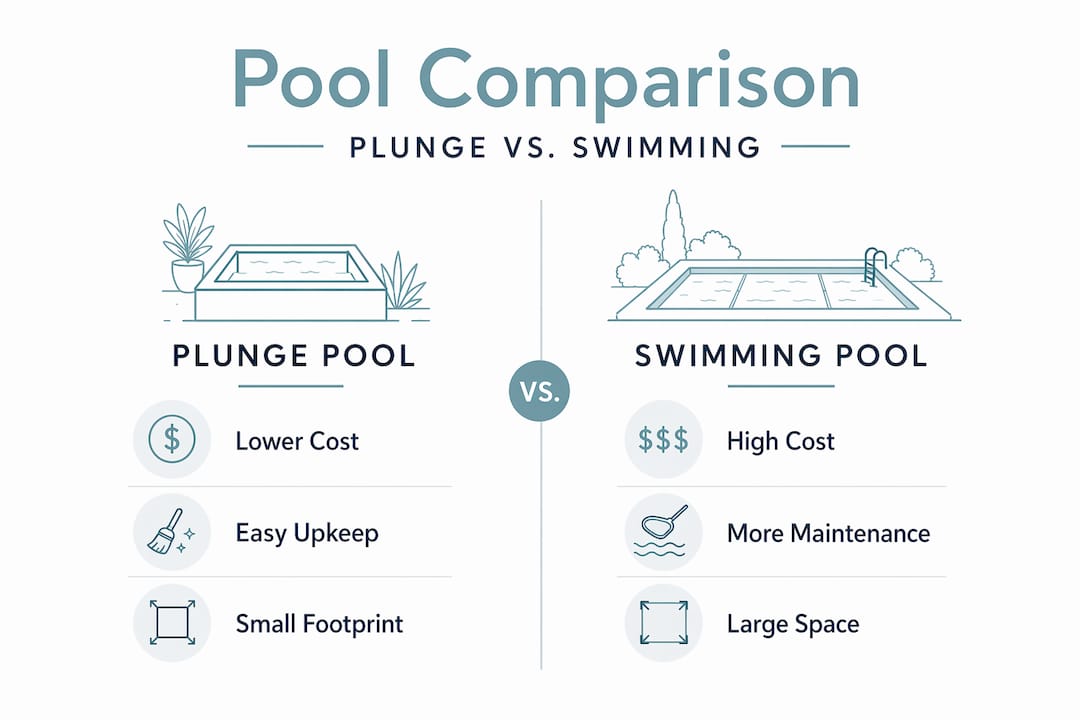
| Factor | Outdoor plunge pool | Traditional swimming pool |
|---|---|---|
| Average installation cost | $10,000 to $35,000 | $40,000 to $100,000+ |
| Water volume | 2,000 to 6,000 gallons | 15,000 to 30,000 gallons |
| Chemical use | Minimal, due to smaller volume | High, frequent dosing required |
| Energy consumption | 3 to 5 kWh per day | Significantly higher, pump runs daily |
| Cleaning frequency | More frequent due to debris exposure | Less frequent per gallon of water |
| Footprint required | 50 to 150 sq ft | 400 to 800+ sq ft |
Plunge pools consume less water and energy than standard pools, which matters both for your monthly utility bills and your environmental footprint. That energy efficiency is worth paying attention to, especially if you are in a climate with high electricity rates. For homeowners curious about how outdoor equipment affects home energy use, resources like the HVAC and energy efficiency blog from Strong Heating and Cooling offer useful context on managing outdoor appliance loads.
Pro Tip: Position your chiller unit away from bedroom windows and neighboring fences. Outdoor chillers can generate noise comparable to a running refrigerator. A small sound barrier of dense shrubbery or a fence panel can reduce that noise significantly without blocking airflow to the unit.
Designing a plunge pool that fits your backyard
Getting the design right is where a plunge pool transforms from a useful wellness tool into an actual soothing oasis in your yard. The good news: the compact size that makes plunge pools affordable also makes them far easier to integrate beautifully into existing outdoor spaces.
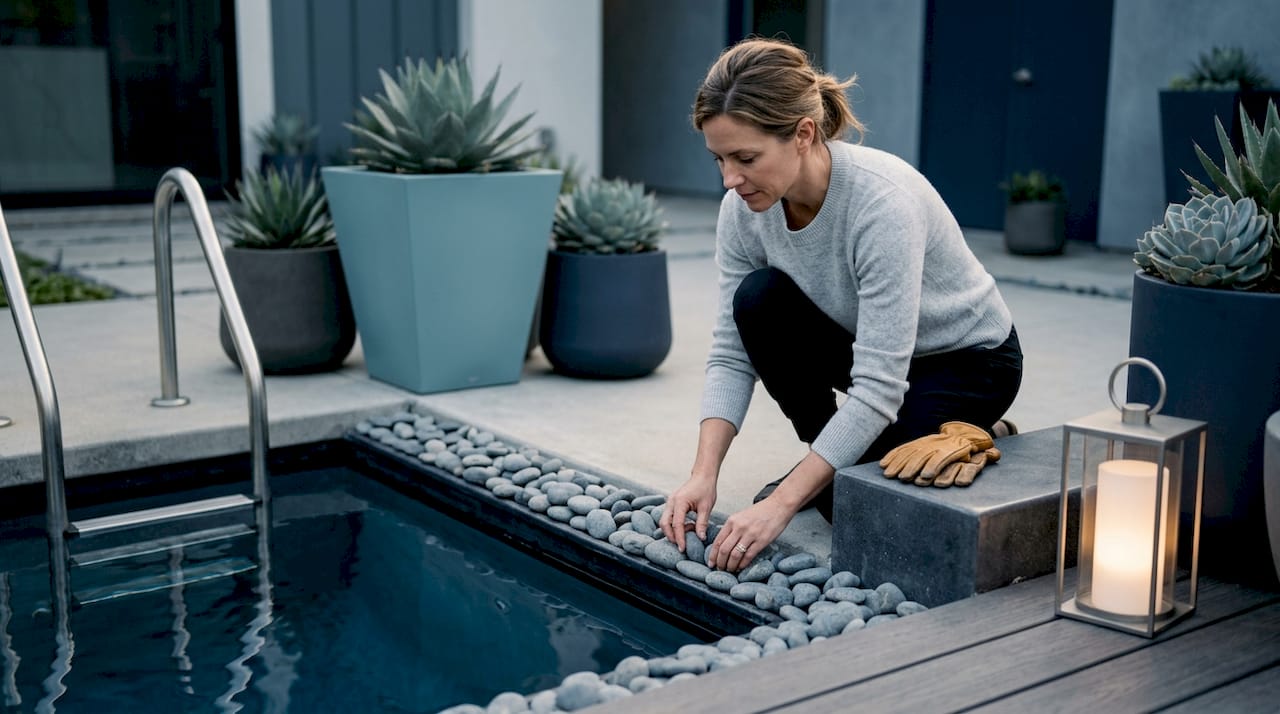
Start with the fundamentals of designing a plunge pool. Depth matters more than length. Most users prefer a pool deep enough to submerge to the shoulders while seated or standing. Shape options include rectangular, round, oval, and freeform. Rectangular designs tend to integrate cleanly with modern patios and deck lines. Freeform shapes suit naturalistic garden settings where you want the pool to feel like it belongs rather than was installed.
When it comes to the best plunge pool materials, you have three main options:
- Fiberglass: Low maintenance, smooth finish, fast installation, and naturally resistant to algae. The most popular choice for residential outdoor installs.
- Concrete (gunite): Fully customizable in shape and finish. Longer installation timeline and slightly higher maintenance, but offers unmatched design freedom.
- Stainless steel: Premium option with a sleek, modern aesthetic. Extremely durable and easy to clean, often chosen for rooftop or contemporary design settings.
For plunge pool landscaping ideas, think about what surrounds the water, not just the water itself. A cedar deck or natural stone surround creates warmth and texture. Low ornamental grasses and native plants soften the edges while requiring minimal upkeep. A nearby outdoor sauna or fire pit turns a standalone plunge pool into a complete wellness zone. Many homeowners are discovering that backyard wellness retreats built around a plunge pool and sauna combination become the most-used space on their property.
Lighting deserves more attention than it usually gets. LED strip lighting along the pool edge creates safety and ambiance after dark. Underwater LED fixtures in cool white tones enhance the cold water aesthetic. Warm-toned uplighting on surrounding trees and plants creates a visual contrast that makes the space feel intentional and inviting.
Seasonal care and plunge pool maintenance tips
Outdoor exposure is the main maintenance variable that separates a plunge pool from an indoor setup. Sunlight accelerates algae growth. Wind drops debris into the water. Seasonal temperature swings stress equipment. None of these are dealbreakers. They just require a consistent routine.
Follow this maintenance sequence for an outdoor plunge pool year-round:
- Skim the surface daily. Leaves, pollen, and insects accumulate quickly outdoors. A 2-minute skim each morning prevents debris from breaking down and affecting water chemistry.
- Test water chemistry twice per week. Outdoor pools face more chemical demand due to UV exposure and debris load. Keep pH between 7.2 and 7.6 and sanitizer levels stable.
- Clean filters weekly. Smaller water volume means filters work harder. A quick rinse weekly prevents flow restriction and keeps the water clear.
- Use an insulated cover whenever the pool is not in use. Opaque, insulated covers are the most effective single tool for reducing energy loss and blocking algae-promoting sunlight.
- Inspect equipment monthly. Check hoses, seals, and the chiller unit for wear. Catching small issues early prevents expensive repairs.
- Winterize before the first hard freeze. In cold climates, winterization with insulated tubs or drainage systems protects plumbing from freeze damage. This is not optional if you live where temperatures drop below 32°F for extended periods.
Outdoor plunge pools need 25 to 30% more frequent debris cleaning than indoor setups. Building that expectation into your routine from day one will save you from the frustration that causes many owners to neglect their pools mid-season.
My honest take on the outdoor plunge pool trend
I have spent years watching the backyard wellness category evolve, and I will say this plainly: outdoor plunge pools are not a luxury trend for people with large budgets and larger yards. They are one of the smartest wellness investments available to a homeowner with even a modest outdoor space.
What surprises me most is how often people underestimate the mental health return. I expected the physical benefits, the circulation improvements, the recovery acceleration. What I did not fully anticipate was how much the outdoor ritual itself contributes. Stepping outside first thing in the morning, entering cold water, breathing through the discomfort, and emerging alert and grounded is a completely different experience than using a cold plunge indoors. The connection to open air and natural light appears to amplify the psychological benefit in a way that is hard to quantify but easy to feel.
I have also encountered the misconception that outdoor plunge pools require constant, complicated upkeep. They do not. They require consistent upkeep, which is a very different thing. A 10-minute daily routine covers most of it.
The combination I keep recommending is a plunge pool paired with an outdoor sauna setup. Heat followed by cold immersion is one of the most researched contrast therapy protocols in sports medicine, and having both in your backyard means you can practice it any morning before work. That is not an indulgence. That is a sustainable wellness infrastructure.
— Philipp
Ready to find your outdoor plunge pool?
At Lifestyleoutdoor, we work with homeowners across Southern California who want a backyard that actually supports their health, not just their aesthetics. Whether you are drawn to the focused recovery of a dedicated cold plunge or the versatility of a swim spa that lets you train and relax in the same water, we have options built for outdoor living.
Our cold plunge collection features models designed specifically for outdoor use, with efficient chillers, durable materials, and easy-access covers that hold temperature without running your energy bill up. If you want something that does more, our swim spas combine resistance swimming with hydrotherapy in a single footprint. For full backyard wellness setups, our hot tubs pair naturally with any cold plunge installation. Visit a Lifestyleoutdoor showroom or browse online to explore models, pricing, and financing options available today.
FAQ
What is a plunge pool and how does it differ from a swimming pool?
A plunge pool is a compact, deep-water vessel designed for immersion rather than swimming. It typically measures 6 to 14 feet in length and prioritizes hydrotherapy and relaxation over lap swimming, requiring significantly less space, water, and energy than a traditional pool.
How many minutes of cold plunging per week produces real benefits?
Research shows that 11 minutes of cold exposure per week, divided across two to three sessions, is enough to trigger meaningful improvements in mood, focus, and recovery through the dopamine surge and other physiological responses.
Are outdoor plunge pools harder to maintain than indoor ones?
Yes, outdoor pools require more frequent attention due to debris, UV exposure, and temperature swings. Plan for daily surface skimming, twice-weekly water testing, and consistent use of an insulated cover to keep maintenance manageable and operating costs low.
What is the best material for an outdoor plunge pool?
Fiberglass is the most popular choice for outdoor residential installations because it resists algae naturally, installs quickly, and requires minimal upkeep. Concrete offers more design flexibility, and stainless steel suits modern or rooftop settings where durability and aesthetics are the top priorities.
Can a plunge pool replace a traditional swimming pool?
It depends on your goals. If lap swimming or recreational family play is your priority, a plunge pool will not replace that. But for homeowners focused on wellness, recovery, and maximizing a smaller yard, a plunge pool delivers more practical daily value than a traditional pool at a substantially lower cost.