Most homeowners shopping for a backyard water feature assume “hot tub” and “spa” are just two ways to say the same thing. They’re not. The terminology actually matters because it shapes how a product is installed, how much it costs over time, and whether the daily experience actually matches what you envisioned. If you’re planning a backyard upgrade and want to make a confident investment, understanding the real distinction between these two options will save you from surprises and point you toward the right fit for your lifestyle.
Table of Contents
- The terminology explained: Hot tub vs spa
- Installation and setup: What makes them different?
- Electrical requirements and site work: Plug-and-play vs professional install
- Wellness and hydrotherapy: Experience matters
- Which should you choose? Practical factors for homeowners
- The truth most buyers miss about hot tubs vs spas
- Ready to upgrade? Explore more backyard wellness options
- Frequently asked questions
Key Takeaways
| Point | Details |
|---|---|
| Terminology matters less | What retailers call ‘hot tub’ or ‘spa’ often overlaps, so always check the actual product features and installation style. |
| Install type impacts hassle | Hot tubs are usually portable and easier to set up, while spas are permanent and require professional installation. |
| Wellness is about features | Jet placement, water temperature, and ergonomic seats determine your relaxation, not just the label. |
| Plan for your lifestyle | Consider maintenance, usage flexibility, and how your wellness goals fit with either a hot tub, spa, or swim spa. |
The terminology explained: Hot tub vs spa
Walk into any showroom or browse product pages online, and you’ll quickly notice that “hot tub,” “spa,” and even “Jacuzzi” get tossed around like they’re completely interchangeable. Marketing copy blurs these lines intentionally. A premium product might get labeled a “spa” to signal luxury, while a nearly identical unit gets labeled a “hot tub” because it targets a budget-conscious buyer.
Here’s what the terms actually mean in practical use:
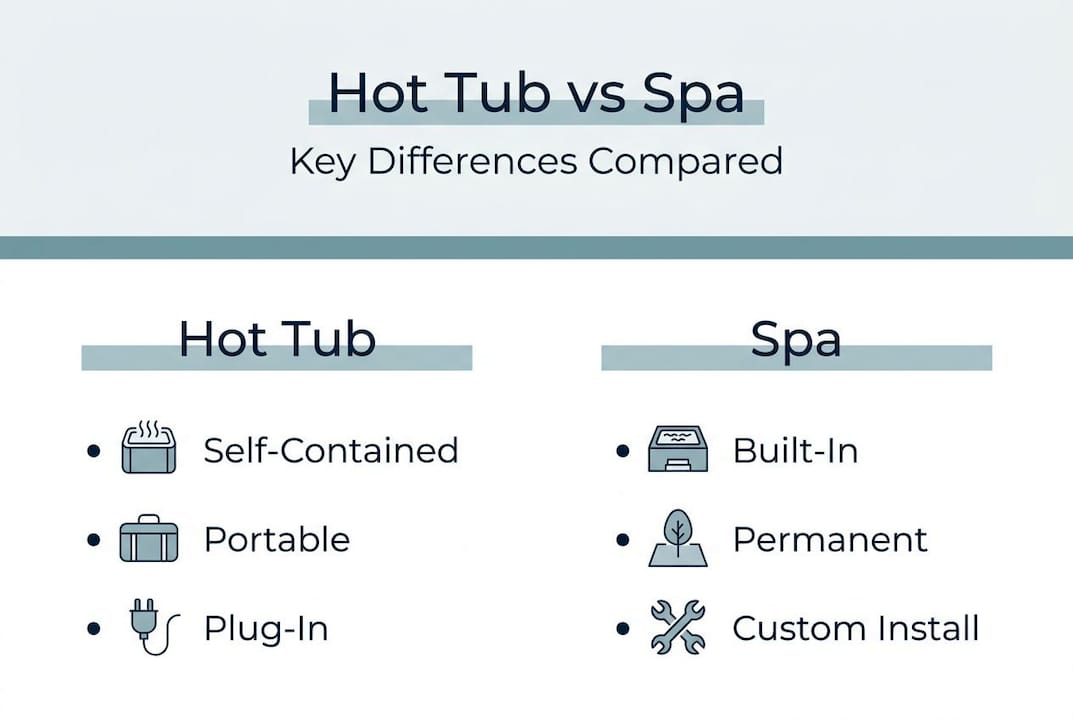
- Hot tub: A self-contained, heated, jetted tub designed for soaking and relaxation. Most are portable and above-ground. The equipment, plumbing, and control systems are all built into the cabinet itself.
- Spa: A broader term that refers to any water-therapy environment. In residential backyard contexts, a “spa” often refers to a permanent, in-ground or built-in installation that is designed as a fixed architectural feature.
- Jacuzzi: A brand name, not a product category. Jacuzzi Holdings is simply one manufacturer among many. Using “Jacuzzi” as a generic term is like calling all tissues “Kleenex.”
- Swim spa: A hybrid product that combines hydrotherapy jets with a propulsion current for low-impact swimming. It falls between a traditional hot tub and a full lap pool.
“Hot tub” typically refers to a portable heated jetted tub, while “spa” refers to a broader water-therapy experience that often emphasizes hydrotherapy at a higher level. The confusion is real, and it’s worth knowing that both terms overlap heavily in everyday conversation.
Understanding the hot tub health benefits associated with each product type helps you see why the distinction matters beyond just vocabulary. The form and function of what you buy directly affects the quality and consistency of your wellness routine.
Installation and setup: What makes them different?
Now that you understand the terminology, let’s look at how these two options actually show up in real backyard projects. This is where the differences become concrete and consequential.
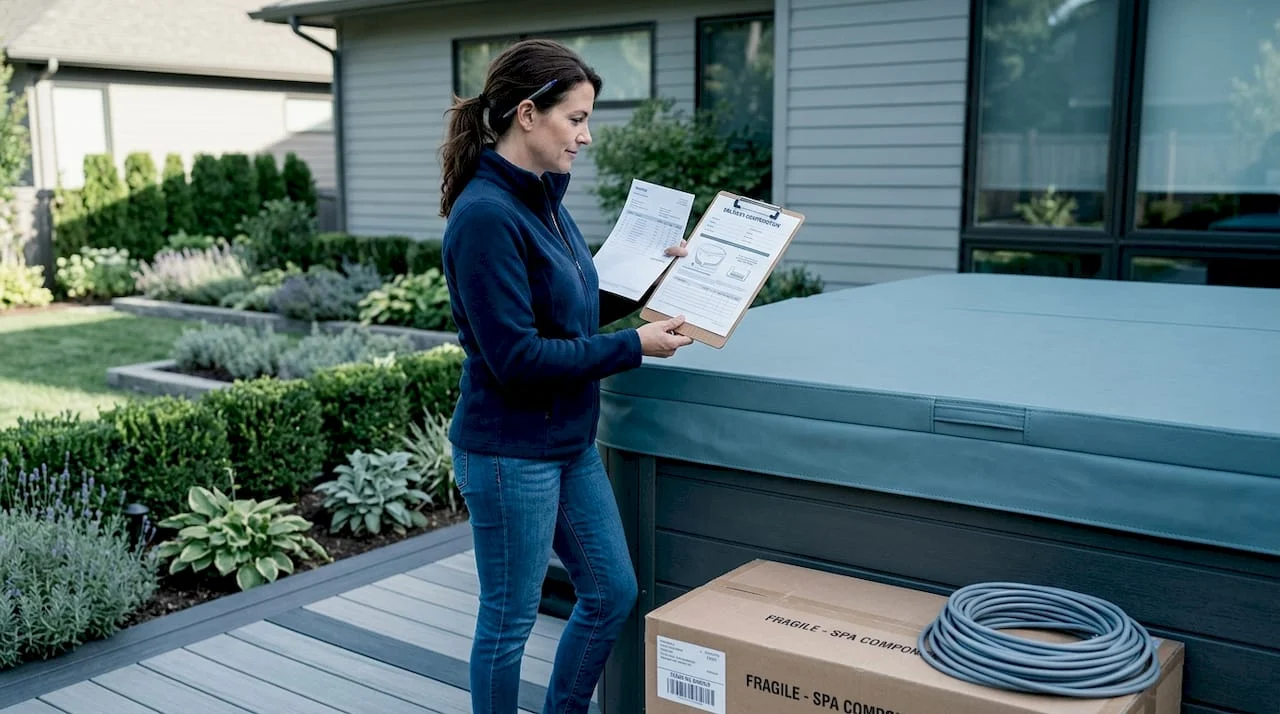
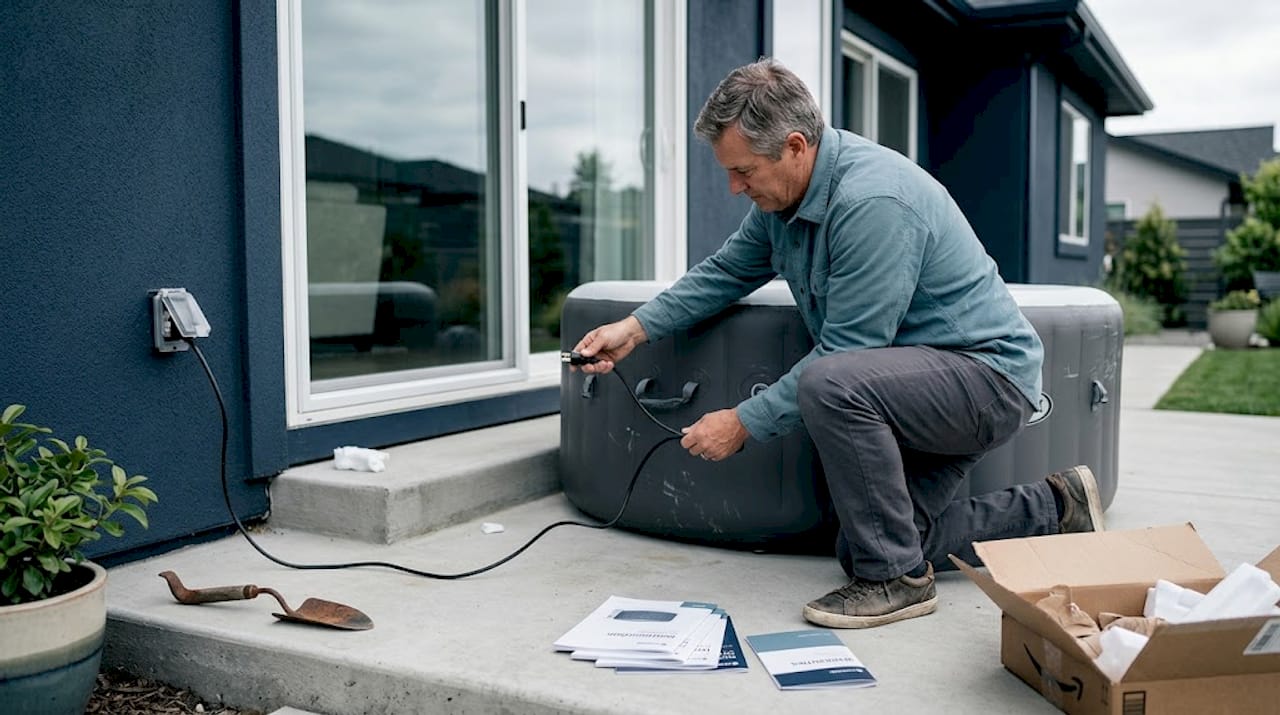
A portable hot tub is a self-contained unit. The pump, heater, jets, and controls are all housed within the cabinet shell. You place it on a stable, level surface like a concrete pad or reinforced deck, plug it in, fill it with a hose, and you’re ready to go. Many models offer 120V plug-and-play operation, meaning no electrician is required.
A built-in spa, by contrast, is a permanent installation. It’s often constructed as part of a larger outdoor living project, integrated with a patio, pool surround, or landscaped environment. Because the plumbing and electrical systems are embedded into the structure itself rather than enclosed in a cabinet, installation requires coordination with contractors, and sometimes permits.
| Feature | Portable hot tub | Built-in spa |
|---|---|---|
| Installation type | Above-ground, portable | In-ground or permanently fixed |
| Setup timeline | Hours to 1 day | Days to several weeks |
| Permits required | Rarely | Often required |
| Mobility | Relocatable | Permanent |
| Equipment location | Self-contained cabinet | Separate equipment pad |
| Cost range | $3,000 to $16,000+ | $8,000 to $25,000+ |
Hot tubs are typically self-contained above-ground units, while spas are usually built-in permanent installations integrated into the backyard landscape. That’s not just a style difference. It determines your contractor list, your project timeline, and your resale story when you eventually sell the home.
Pro Tip: Before committing to a built-in spa, check your local municipality’s permitting requirements. Some jurisdictions treat in-ground spas the same as swimming pools, which can trigger additional safety fencing requirements and inspection timelines.
Making a confident decision starts with knowing your lifestyle priorities. Our guide on hot tub or swim spa buying walks through additional considerations that can help you narrow your choice.
Electrical requirements and site work: Plug-and-play vs professional install
Once you’ve settled on a form factor, your installation experience will vary significantly depending on the electrical and site requirements. This is an area where many buyers underestimate the scope of the project.
Here’s a straightforward breakdown of what each option typically requires:
- Plug-and-play hot tub (120V): Uses a standard household outlet. No electrician needed. Simply set the unit on a flat surface, connect to power, and fill with water. Ideal for renters or homeowners who want flexibility.
- Hard-wired hot tub (240V): Requires a licensed electrician to run a dedicated circuit from the main panel. A GFCI breaker (ground fault circuit interrupter, a safety shutoff device) is mandatory. This is the most common setup for full-size portable hot tubs.
- Built-in spa (240V with additional site work): Requires a dedicated 240V circuit, separate equipment pad, professional plumbing, and often trenched conduit. Permits are frequently required, and inspections may add weeks to the timeline.
Plug-and-play models differ significantly from hardwired spas in both cost and complexity. A hard-wired setup might add $500 to $2,000 to your project depending on how far the panel is from the installation site. Built-in spas can add considerably more when site preparation, trenching, and concrete work are factored in.
Site preparation is a factor that many buyers overlook entirely. A portable hot tub needs a level, load-bearing surface that can support the weight of the filled unit, often 3,000 to 5,000 pounds when full of water and people. A concrete pad or reinforced deck is ideal. A built-in spa requires far more extensive preparation: excavation, concrete forming, tile or surface finishing, and integration with surrounding hardscaping.
Staying on top of ongoing care once the unit is running is just as important as the initial setup. Our resource on hot tub maintenance covers everything from water chemistry to filter cleaning schedules that keep your investment in top condition.
Wellness and hydrotherapy: Experience matters
Beyond installation logistics, the daily experience is what you’ll live with for years. This is where the distinction between a hot tub and a spa becomes most personal, because your wellness goals should drive the decision.
Hydrotherapy is the use of water pressure, temperature, and movement to promote physical recovery and relaxation. Both hot tubs and spas offer it, but the depth and targeting of those features can vary widely.
Here’s what to evaluate when comparing wellness features:
- Jet count and placement: Higher-end units offer strategically positioned jets targeting the neck, shoulders, lower back, and legs. More jets don’t always mean better therapy. Placement and adjustability matter more than raw numbers.
- Ergonomic seating: Molded seats that cradle the body and position you in front of specific jet clusters make a meaningful difference in therapeutic effectiveness.
- Water temperature control: Quality units maintain water temperature within a degree or two of your target setting. Inconsistent heating undermines the experience.
- Multi-zone therapy: Some premium models divide seating into distinct zones, each offering a different jet type or pressure level, allowing multiple users to enjoy different experiences simultaneously.
The prioritization of hydrotherapy zoning and seating ergonomics drives day-to-day comfort more reliably than the label on the product. A well-engineered portable hot tub can outperform a poorly designed built-in spa on nearly every wellness metric.
Pro Tip: When shopping in person, sit in the units with the jets running. Dealers can activate the jets in showrooms. The difference in jet quality and pressure between models is immediately obvious when you’re actually seated in the water.
For a deeper look at how water therapy improves physical and mental wellbeing, explore resources on hot tub hydrotherapy and the broader benefits of owning a hot tub that go well beyond simple relaxation.
Which should you choose? Practical factors for homeowners
Having covered form, installation, and wellness, let’s bring it all together for your decision. The right choice depends on a combination of lifestyle needs, budget, and long-term vision for your backyard.
Consider a portable hot tub if you:
- Want faster installation with fewer contractors involved
- Value the flexibility to move the unit if you relocate
- Prefer simpler, self-contained maintenance with accessible components
- Are focused on casual soaking and regular stress relief
- Have a mid-range budget and want strong value for your investment
Consider a built-in spa if you:
- Are planning a comprehensive backyard renovation where the spa is a permanent design feature
- Want a seamless aesthetic integration with your pool, patio, or landscape
- Are committed to the property long-term and view the spa as added home value
- Have the budget and timeline for a larger construction project
Consider a swim spa if you:
- Want the benefits of hydrotherapy combined with low-impact fitness
- Don’t have space for a full lap pool but want to swim at home
- Have a family that spans different age groups with different activity preferences
Hot tubs align with simple relaxation goals and faster installation, while spas work better as permanent architectural elements. A swim spa is the best choice when you want both fitness and hydrotherapy in one footprint.
One practical point worth noting: maintenance complexity scales with installation type. A self-contained portable hot tub keeps all its serviceable parts in one accessible location. A built-in spa may require accessing equipment through separate panels or crawl spaces. That’s a real difference in how much time and effort routine upkeep demands.
If stress relief and muscle recovery are your primary goals, our hot tub for stress relief resource gives you a complete picture of how soaking routinely pays dividends in physical and mental wellbeing.
The truth most buyers miss about hot tubs vs spas
Here’s something we see often: a buyer comes in after weeks of online research, convinced they need a “spa” because of how it was described in a premium brochure. They’ve fallen for the label. When we walk them through the actual specifications, they realize the product they were excited about is functionally the same as a portable hot tub with a more expensive marketing story attached.
Dealers use terminology strategically. The same jetted tub may be marketed as a “spa” to justify a higher price point or positioned as a “hot tub” to appeal to a value-focused buyer. The word on the brochure tells you almost nothing about the actual engineering.
What should you check instead? Focus on three things: the mechanical architecture (is it a self-contained cabinet or a built-in system?), the electrical requirements (120V plug-and-play or 240V hard-wired?), and the insulation rating (a higher R-value means better heat retention and lower monthly energy costs). Those three factors tell you more about what you’re actually buying than any marketing label ever will.
We’ve seen homeowners pay a premium for the word “spa” and end up with a product that costs more to heat, takes longer to service, and delivers a less satisfying jet experience than a well-built portable hot tub at a lower price point. Don’t let terminology drive your investment. Let engineering drive it.
The benefits of purchasing Hot Spring Spas, for example, come from the specific engineering and insulation technology built into the product, not from what it’s called on the box.
Ready to upgrade? Explore more backyard wellness options
If this guide has helped clarify the distinction and you’re feeling ready to take the next step toward your personal backyard retreat, we have the resources to make that journey smooth and enjoyable.

Browse our full selection of hot tubs for sale to compare models by jet count, seating capacity, voltage, and price range. If you’re leaning toward something that combines relaxation and fitness, explore our lineup of swim spas for sale for a broader look at what’s possible in your space. And if you want to think beyond the unit itself, our inspiration guide on hot tub backyard ideas will help you envision the full outdoor retreat you deserve. Our team is always ready to help you match the right product to your lifestyle.
Frequently asked questions
Is a hot tub or spa easier to maintain for homeowners?
Hot tubs are generally easier to maintain because of their self-contained portable design, which keeps pumps, filters, and controls accessible in one place. Built-in spas often require more complex access to equipment for routine servicing.
Do spas offer better hydrotherapy than hot tubs?
Spas traditionally emphasize dedicated hydrotherapy features, but many premium portable hot tubs offer equally impressive jet zoning and ergonomic seating. The quality of hydrotherapy depends far more on engineering than on whether the product is labeled a “spa.”
Can I install a hot tub myself, or do I need a professional?
Most plug-and-play 120V models can be set up without a professional if you have a suitable surface and a standard outlet nearby. In-ground spas always require licensed electricians, plumbers, and often a general contractor to complete the installation legally and safely.
What is a swim spa and how does it differ from a hot tub or traditional spa?
A swim spa combines powerful hydrotherapy jets with a swim current that lets you exercise against resistance in a compact footprint. It serves as both a hydrotherapy and fitness solution, making it ideal for homeowners who want more than simple soaking but don’t have space for a full pool.
Recommended
- Hot Spring® Spas – Health, Wellness & Hydromassage – Lifestyle Outdoor
- Fantasy Spas® – Affordable Hot Tubs for Small Spaces – Lifestyle Outdoor
- Backyard Retreat: Creating the Perfect Hot Tub Atmosphere
- Hot Tubs for Back Pain – Can They Really Ease The Pain?
- 7 Spa and Pool Combo Ideas for Luxurious Florida Backyards