If you’ve been wondering what is an outdoor sauna and whether one belongs in your backyard, you’re not alone.
Millions of homeowners are discovering that a standalone sauna outside the house delivers something an indoor unit simply can’t match: the combination of genuine heat therapy with fresh air, open sky, and a true sense of retreat. Outdoor saunas are self-contained structures placed in your backyard, on a patio, or poolside, and they’re far simpler to install than most people expect.
This guide covers everything from types and features to health benefits and installation basics.
Table of Contents
- Key takeaways
- What is an outdoor sauna, exactly?
- Types of outdoor saunas and their features
- Health benefits backed by science
- Installation and maintenance basics
- Outdoor saunas vs. other backyard wellness options
- My honest take on outdoor saunas after years in this industry
- Explore outdoor saunas and backyard wellness at Lifestyle Outdoor
- FAQ
Key takeaways
| Point | Details |
|---|---|
| Outdoor vs. indoor distinction | Outdoor saunas are freestanding structures that skip complex waterproofing, making them easier and cheaper to install. |
| Installation cost savings | Outdoor saunas cost less to install than comparable indoor units. |
| Proven health benefits | Using a sauna four to seven times per week is linked to a 50% reduction in cardiovascular mortality. |
| Insulation matters most | Mineral wool insulation is the only safe choice for saunas. Fiberglass off-gasses formaldehyde at high heat. |
| Lifespan and value | A well-built outdoor cabin sauna can last 30 to 50 years with minimal maintenance. |
What is an outdoor sauna, exactly?
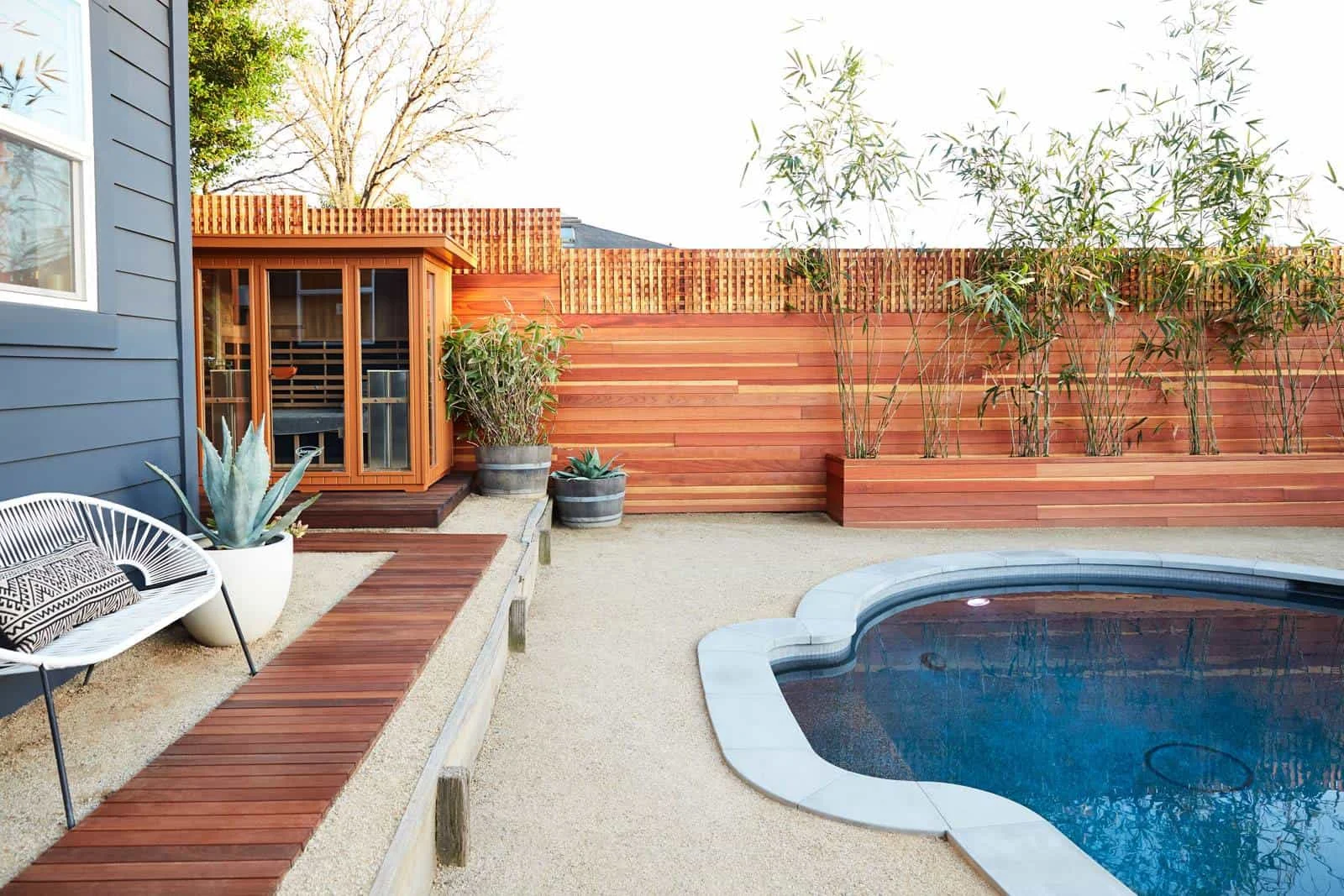
An outdoor sauna is a freestanding, self-contained structure designed to generate intense dry or steam heat, placed entirely outside your home. Unlike a bathroom renovation or an indoor steam room, it doesn’t require you to tear into walls, manage vapor barriers, or install specialized waterproofing throughout your home’s interior. You build it as its own structure. That distinction changes everything about the planning, permitting, and installation process.
Most outdoor saunas sit on a level foundation in the backyard, on a deck, beside a pool, or at the edge of a patio. The structure is weatherproofed on the exterior while the interior is built to hold and circulate heat efficiently. Common materials include cedar, hemlock, or thermally modified wood, all of which handle moisture and temperature fluctuation without warping.
Here’s why this matters for cost: outdoor saunas are 30 to 50% cheaper to install than indoor equivalents. When you don’t need to retrofit a room, re-route HVAC systems, or add moisture protection behind your drywall, the project becomes far more manageable. For most homeowners, that translates directly into a bigger budget for a better sauna.
Key characteristics that define an outdoor sauna include:
- Freestanding structure with no shared walls required
- Exterior weatherproofing combined with interior heat retention
- Flexible placement on grass, gravel, concrete, or decking
- No indoor renovation needed before or after installation
- Easy access to the outdoors for the traditional cool-down between heat rounds
The location itself adds real value too. Natural outdoor settings amplify the relaxation and wellness effects of every session. Stepping out into cool air after a long heat cycle is not just tradition. It’s a physiological trigger that enhances recovery and deepens the overall experience.
Types of outdoor saunas and their features
Knowing what your options look like before you buy saves you from a lot of regret. There are four main types worth understanding, and they differ significantly in performance, lifespan, and the experience they deliver.
Barrel saunas are the most recognizable shape in American backyards. Their cylindrical form creates a smaller air volume at the top, which means they heat up quickly and efficiently. They’re visually appealing and relatively affordable as kits. The trade-off is insulation. Barrel saunas offer quick heat times but less effective insulation and a shorter lifespan than purpose-built cabin designs. In colder climates, that matters.
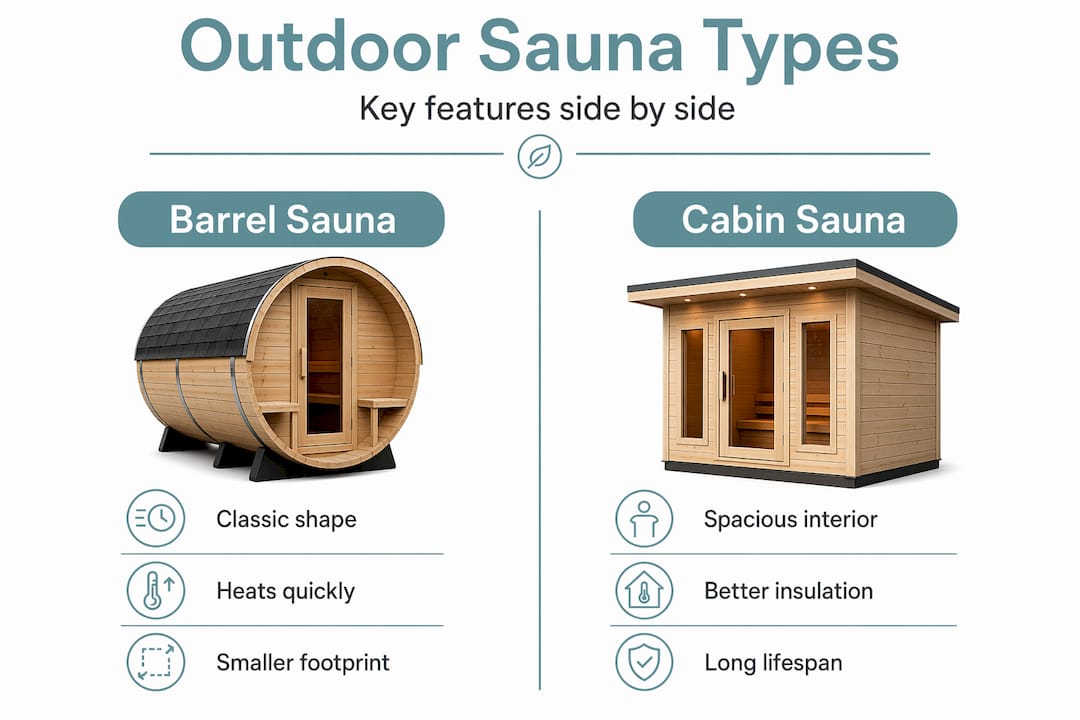
Outdoor cabin saunas are the gold standard. They’re square or rectangular structures built with proper framing, insulation, and interior benching. A well-constructed cabin sauna delivers the best “loyly” experience, which is the Finnish term for the steam created when water is poured over hot rocks. Purpose-built cabin saunas offer unrestricted bench design and the most authentic steam experience of any outdoor format.
Infrared saunas operate differently from traditional Finnish-style units. Instead of heating the air around you, infrared panels emit radiant heat that warms the body directly at lower ambient temperatures (typically 120°F to 140°F versus 160°F to 200°F for traditional). They’re energy-efficient, popular for joint recovery, and available in outdoor-rated enclosures.
Wood-burning saunas offer the most traditional experience and work entirely off-grid. They require a proper flue system and regular ash removal, but nothing replicates that smoky, natural heat.
| Type | Heat method | Insulation quality | Lifespan | Best for |
|---|---|---|---|---|
| Barrel sauna | Wood or electric | Moderate | 10 to 20 years | Budget-friendly aesthetics |
| Cabin sauna | Wood, electric, or infrared | Excellent | 30 to 50 years | Long-term performance |
| Infrared sauna | Infrared panels | Good | 15 to 25 years | Energy efficiency, recovery |
| Wood-burning sauna | Wood fire | Depends on build | 20 to 40 years | Off-grid, traditional feel |
Pro Tip: If you’re debating between a barrel kit and a cabin build, ask yourself how often you plan to use it in winter. If you live somewhere that gets cold, a cabin sauna will pay for the price difference in fuel savings and consistent performance within two to three seasons.
For a closer look at outdoor infrared models available today, Lifestyle Outdoor carries a curated range of outdoor-rated units worth exploring.
Health benefits backed by science
The reason outdoor saunas have become a serious wellness investment and not just a luxury item comes down to the research. The numbers are genuinely striking.
A landmark study from the University of Eastern Finland found that frequent sauna use reduces CVD mortality by 50% and sudden cardiac death risk by 63% in people who use a sauna four to seven times per week compared to once a week. That’s not a marginal improvement. It’s a category-level shift in cardiovascular risk.
“Frequency of sauna use impacts health benefits more significantly than extreme heat or time duration in the sauna bath.” — ThermalFinn Sauna Health Research
The mechanism behind this is measurable. Heart rate during a Finnish sauna session climbs to 100 to 150 beats per minute, comparable to brisk walking or easy cycling. Your blood vessels dilate, cardiac output rises, and the cardiovascular system gets a genuine workout without joint stress. Beyond the session itself, a single sauna use triggers endothelial function improvement and measurable arterial stiffness reduction that lasts 30 to 60 minutes after you step out.
For mental health, the outdoor setting adds another layer. Transitioning from the heat of the sauna into cool open air, hearing birds or feeling a breeze, creates a grounding effect that genuinely cannot be replicated indoors. It’s one of the clearest arguments for why choose outdoor saunas over indoor alternatives when you have the space.
You can explore a detailed breakdown of sauna vs. hot tub benefits to see how these two experiences compare for cardiovascular and relaxation outcomes.
Installation and maintenance basics
Getting the installation right from the start protects your investment and prevents expensive repairs down the road. Here’s what to prioritize:
1. Start with a proper foundation
Outdoor sauna cabins weigh between 2,000 and 4,000 lbs, and in colder climates, frost heave can shift an undersized base and crack the structure. Concrete piers, a gravel pad, or a reinforced deck are all viable options. Many consumers underestimate this step, and a poor base leads to structural damage and repairs that cost more than the foundation itself would have.
2. Use mineral wool insulation exclusively
Fiberglass insulation off-gasses formaldehyde above 80°C, making it genuinely unsafe inside a sauna. Mineral wool handles extreme heat without releasing anything harmful, and it performs better in the high-humidity cycles a sauna creates.
3. Plan for proper ventilation
A sauna needs controlled airflow to refresh oxygen and prevent excess moisture buildup on the wood. A low intake vent and a high exhaust vent create the natural convection cycle that keeps air quality clean and wood dry between uses.
4. Choose your heater for your situation
Electric and wood-burning heaters are the two most common choices. Electric heaters are convenient, precise, and easy to control remotely. Wood-burning heaters offer a more traditional experience and work without an electrical hookup. Infrared panels are growing in popularity for users prioritizing energy efficiency.
5. Maintain the wood regularly
The exterior of your outdoor sauna faces sun, rain, and seasonal temperature swings. Treat exterior wood with a quality penetrating oil once or twice a year to prevent cracking and graying. For detailed guidance on caring for outdoor wood structures, wooden outdoor furniture care practices apply directly to sauna exteriors as well.
Pro Tip: Before you order a kit or hire a builder, walk your yard at different times of day and mark where the afternoon shade falls. Placing a sauna in direct afternoon sun in a warm climate will make summer sessions uncomfortable and stress the exterior finish faster.
Outdoor saunas vs. other backyard wellness options
When you’re thinking about the best use of your backyard budget, it helps to understand how an outdoor sauna fits alongside other options like hot tubs and swim spas.
Here’s an honest comparison:
- Outdoor saunas offer dry heat therapy, cardiovascular benefits, and a deeply meditative experience. Entry-level outdoor barrel saunas start around $2,000 to $4,000 for a kit. Quality cabin builds typically run $8,000 to $20,000 installed.
- Hot tubs provide hydrotherapy through warm water and jet pressure, which is particularly effective for muscle recovery and joint pain relief. They’re social, easy to use, and require less of a ritual than a traditional sauna session.
- Swim spas combine exercise and relaxation in one unit and work well for people prioritizing active recovery and year-round aquatic fitness.
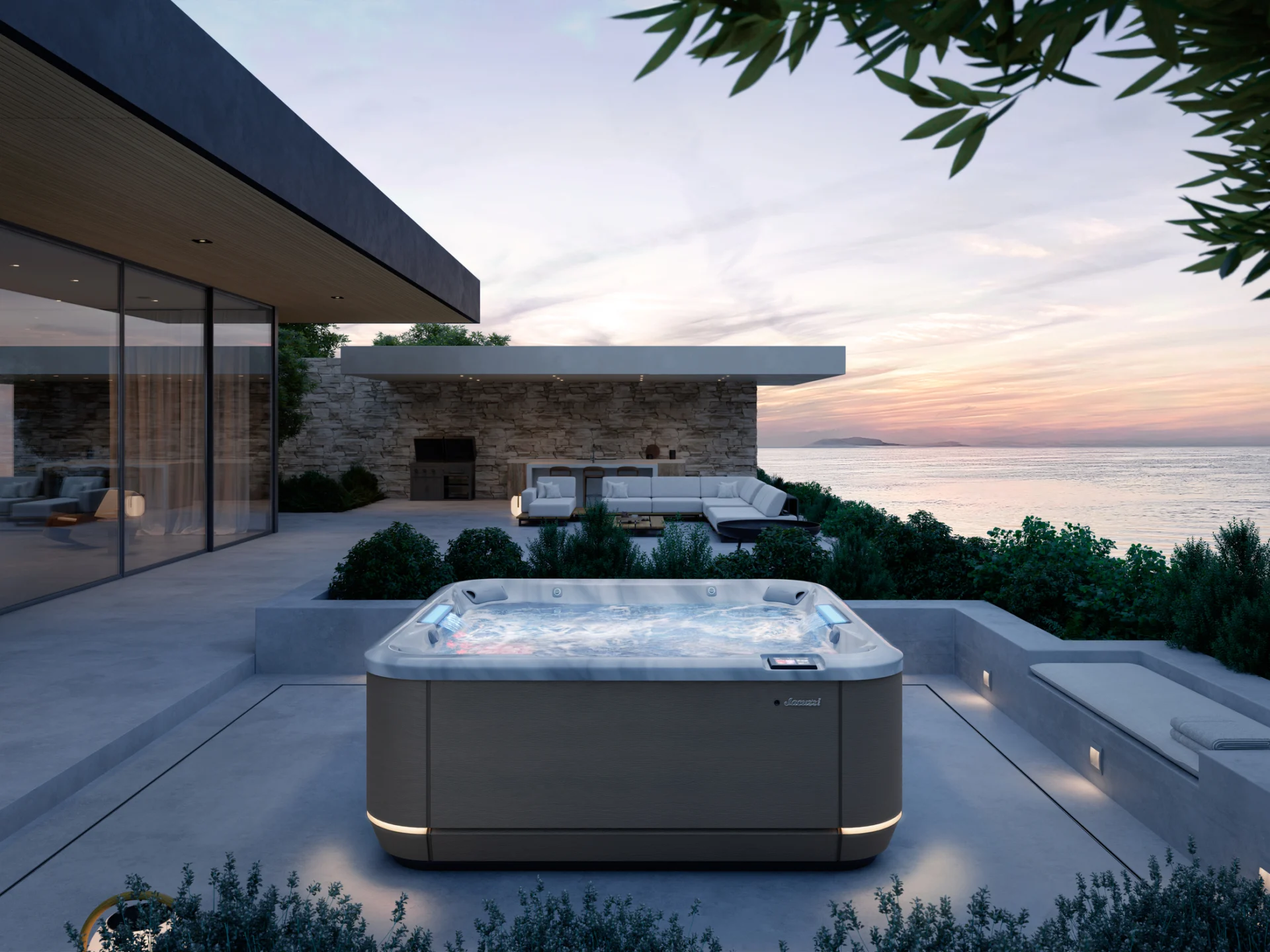
The good news is that these options genuinely complement each other. A sauna and hot tub combination in the same backyard creates a complete backyard wellness retreat that covers nearly every recovery and relaxation need. Moving from the intense heat of the sauna to the warm jets of a hot tub is a recovery protocol that athletes and wellness enthusiasts have used for decades, and it works beautifully in a private home setting.
Explore outdoor saunas and backyard wellness at Lifestyle Outdoor
Ready to take the next step? Lifestyle Outdoor carries a handpicked selection of high-quality outdoor saunas, from infrared models to traditional cabin-style builds, designed for the Southern California climate and beyond.
Whether you’re drawn to the meditative heat of a wood-burning cabin sauna or the convenience of an infrared unit you can control from your phone, the team at Lifestyle Outdoor can help you find the right fit for your space and goals. Browse the full outdoor and indoor sauna collection, or explore how a sauna pairs beautifully with a premium hot tub or swim spa for a complete backyard wellness setup. Visit a showroom or reach out directly for personalized guidance on installation, customization, and financing options.
FAQ
What is an outdoor sauna and how does it differ from indoor?
An outdoor sauna is a freestanding, self-contained heat structure placed in your backyard or on a patio, requiring no indoor renovation or waterproofing. Indoor saunas are built into existing rooms and typically cost 30 to 50% more to install due to the structural modifications required.
What are the main health benefits of using an outdoor sauna?
Regular sauna use is linked to significant cardiovascular benefits, including a 50% reduction in cardiovascular mortality and a 63% lower risk of sudden cardiac death with four to seven sessions per week, according to University of Eastern Finland research.
How long does an outdoor sauna last?
A well-built outdoor cabin sauna with quality insulation and proper maintenance can last 30 to 50 years. Barrel saunas have a shorter lifespan, typically 10 to 20 years, depending on climate exposure and build quality.
What type of insulation should an outdoor sauna use?
Always use mineral wool insulation. Fiberglass releases formaldehyde at temperatures above 80°C, making it unsafe for sauna use. Mineral wool handles extreme heat without off-gassing and performs better in high-humidity heat cycles.
Do I need a special foundation for an outdoor sauna?
Yes. Outdoor cabin saunas weigh between 2,000 and 4,000 lbs and require a level, frost-resistant foundation. In colder climates especially, frost heave can shift an inadequate base and cause structural damage that is costly to repair.