Most homeowners picture a hot tub as a backyard luxury, the kind of addition that looks great at a party but doesn’t do much beyond that.
The reality is quite different. A growing body of research shows that regular hot tub use delivers real, measurable improvements to your physical and mental health, from lower blood pressure to deeper sleep and less chronic pain.
This guide walks you through exactly what the science says, who stands to gain the most from hot tub health benefits, and what every homeowner should know before stepping in.
Table of Contents
- How do hot tubs improve your health?
- Evidence-based physical health benefits
- Hot tubs for stress, sleep, and mental wellness
- Who should (and shouldn’t) use hot tubs?
- A fresh perspective: What most guides miss about hot tubs and health
- Enhance your wellness at home with the right hot tub
- Frequently asked questions
Key Takeaways of Hot Tub Health Benefits
| Point | Details |
|---|---|
| Hydrotherapy works | Hot tubs apply heat, buoyancy, and jets to provide science-backed wellness benefits. |
| Proven health impacts | Evidence shows lowered blood pressure, pain reduction, and better sleep with regular use. |
| Not for everyone | Some groups, including pregnant individuals and those with certain conditions, should avoid hot tubs. |
| Best results with routine | Frequent, moderate use yields the most consistent health improvements. |
| Professional advice matters | Personalized guidance from a physician ensures hot tub safety and maximal benefit. |
Hot Tub Health Benefits: How Spas Improve Your Health
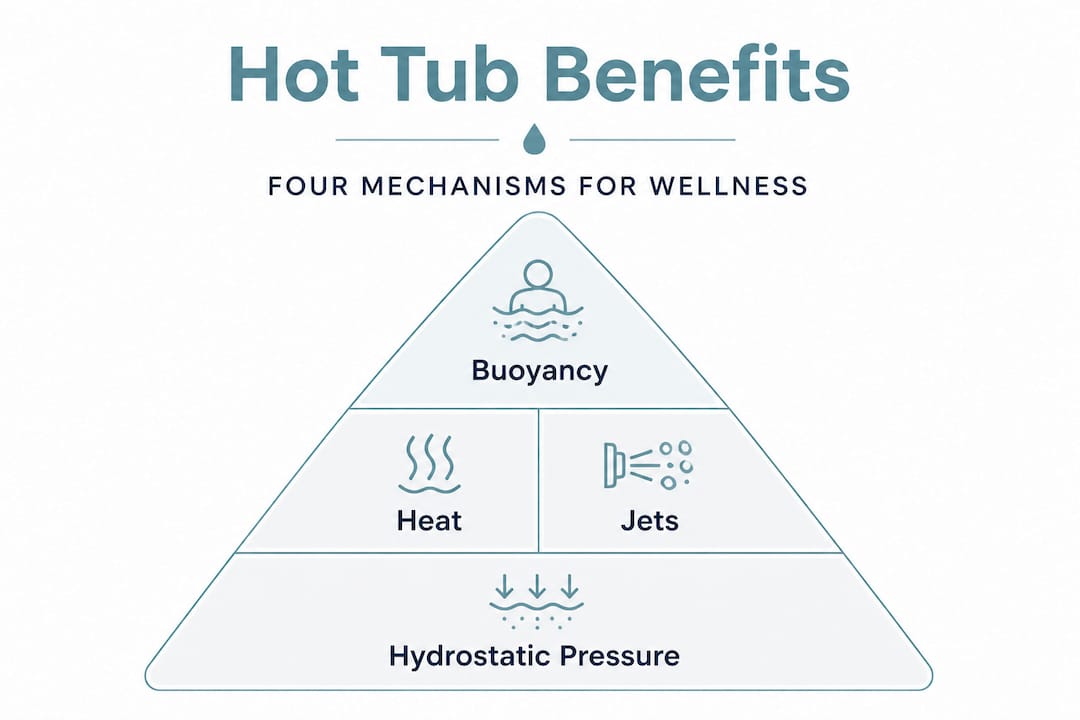
Your body responds to a hot tub in four powerful ways the moment you slip into the water. The combination of heat, buoyancy, hydrostatic pressure (the gentle squeeze of water on your body), and targeted jets creates what hydrotherapy researchers call a synergistic effect. Each element does something unique, but together they produce changes that no single therapy can easily replicate.
Heat causes your blood vessels to widen, a process called vasodilation. More blood reaches your muscles, joints, and skin, which speeds up the delivery of oxygen and nutrients while flushing out metabolic waste. Buoyancy is equally powerful. The upward force of water partially cancels out the downward pull of gravity, which means your joints carry far less load. Buoyancy reduces joint pressure by up to 90%, and the heat simultaneously triggers vasodilation, improving blood flow while hydrostatic pressure assists circulation and waste removal, with jets adding mechanical massage that stimulates mechanoreceptors for deeper muscle relaxation.
Hydrostatic pressure also gently compresses the limbs, which encourages blood and lymphatic fluid to move more efficiently through the body. Jets add a third layer of stimulus, providing mechanical massage that targets specific muscle groups and amplifies the convective (flowing) heat transfer from the water to your tissues. You can explore the full picture of general hot tub health benefits to get a deeper look at how these mechanisms translate into everyday wellness.
Here’s a quick breakdown of each aspect of hot tub health benefits and what it does for you:
| Mechanism | Primary effect | What you feel |
|---|---|---|
| Buoyancy | Reduces joint load by up to 90% | Pain relief, easier movement |
| Heat (vasodilation) | Widens blood vessels, increases flow | Muscle relaxation, warmth |
| Hydrostatic pressure | Improves circulation and lymph flow | Reduced swelling, lighter limbs |
| Jets (mechanical massage) | Stimulates muscles and nerve receptors | Deep tissue relief, tension release |
The 6 hot tub health benefits tie directly to these four mechanisms. Understanding them helps you get more out of every soak rather than just enjoying the experience passively.
Pro Tip: Immerse yourself up to the neck rather than sitting with your shoulders above the waterline. Neck-deep immersion maximizes the buoyancy effect and gives your joints the full 90% load reduction that researchers measure in clinical settings.
Evidence-based physical health benefits
The aspects of hot tub health benefits above aren’t just theoretical. Clinical studies have measured what happens to your body after consistent hot tub use, and the results across cardiovascular health, pain management, lung function, and mobility are genuinely impressive.
1. Cardiovascular health
Hot tubs have a meaningful impact on blood pressure and vascular function, particularly for older adults. Passive heat therapy lowered systolic BP from 124±4 mmHg down to 114±4 mmHg and improved flow-mediated dilation (a measure of blood vessel flexibility) from 4.7% to 6.3% in older adults with reduced kidney function, following 30 sessions of 60-minute soaks. Those are clinically significant numbers. For context, that blood pressure drop is comparable to what some medications achieve.
You can learn more about the hot tub cardiovascular benefits that researchers are documenting.
2. Pain and disability reduction
Chronic low back pain affects millions of Americans, and finding non-pharmaceutical relief is a priority for many. A meta-analysis of 12 randomized controlled trials involving 966 participants found that spa therapy significantly reduces pain (visual analog scale mean difference of 16.07) and disability (Oswestry Disability Index mean difference of 7.12) in chronic low back pain patients. A mean difference of 16 points on a 100-point pain scale is meaningful, real-world relief that changes how people move and feel daily.
Homeowners dealing with persistent back pain will find more detail on pain management with hot tubs that goes beyond the numbers.
3. Pulmonary function
This benefit surprises most people. Hydrotherapy improves pulmonary function, including FEV1 (forced expiratory volume), FVC (forced vital capacity), and peak expiratory flow rate, across healthy individuals, people with COPD, and other patient groups. The hydrostatic pressure on the chest wall during immersion actually trains your respiratory muscles, making breathing more efficient over time.
4. Mobility and flexibility
The combination of reduced joint load and increased blood flow to surrounding tissue makes it easier to move joints through their full range of motion. Physical therapists have used warm water immersion as a mobility tool for decades, and home hot tubs offer a convenient way to apply the same principle regularly.
Here’s how hot tubs compare to other passive therapies on key physical health measures:
| Therapy | Cardiovascular benefit | Pain relief | Pulmonary effect | Mobility support |
|---|---|---|---|---|
| Hot tub | Strong | Strong | Moderate | Strong |
| Sauna | Moderate | Moderate | Minimal | Minimal |
| Warm bath | Mild | Mild | Mild | Mild |
| Massage therapy | Mild | Strong | None | Moderate |
Hot tubs for stress, sleep, and mental wellness
Physical health is just one half of the equation. Many homeowners find that the most immediate and noticeable benefit from their hot tub is how much better they sleep and how much calmer they feel. The research backs both experiences up. Let’s take a closer look at how hot tub health benefits can range from your sleep and stress, to mental wellness and more.
Sleep quality
Your body temperature naturally drops in the evening as a signal to your brain that it’s time to sleep. Soaking in a hot tub raises your core temperature, and when you step out, your body actively cools down, amplifying that natural signal. Hot tubs improve sleep quality by promoting relaxation and mimicking the natural body temperature drop that precedes sleep, with regular use linked to fewer nighttime disturbances.
Many users report falling asleep faster and staying asleep longer within the first two weeks of regular soaking. You can read more about the sleep hot tub health benefits and how to set up a bedtime soaking routine.
Stress and anxiety
The buoyancy effect removes physical tension from your body, and the heat simultaneously activates your parasympathetic nervous system, which is the system responsible for rest and recovery. Together, they create a state of genuine relaxation, not just the superficial kind. Think of stepping into a hot tub as flipping a switch from high alert to calm. Many homeowners find that regular evening soaks become their most effective tool for hot tub relaxation techniques that reset their mood after a demanding day.
Here’s how a consistent hot tub routine supports mental wellness throughout the week:
- Wind down after work. A 15 to 20-minute soak signals your body to shift from work mode to rest mode, making evenings more restorative.
- Soothe pain before sleep. Reducing physical discomfort before bed prevents pain from becoming the thing that keeps you awake at 2 a.m.
- Daily stress reduction. Consistency matters more than duration. Three moderate soaks per week build a cumulative calming effect over time.
- Social connection. Sharing the hot tub with a partner, friend, or family member adds a relational dimension to wellness that’s easy to overlook.
Many homeowners who were initially skeptical have shared hot tub relaxation stories about how their spa became the centerpiece of their self-care routine, often describing it as the one thing in their backyard they use every single day.
Pro Tip: For the best sleep results, soak 1 to 2 hours before you plan to go to bed. This gives your body time to cool down after you exit, which strengthens the sleep-onset signal. Soaking right before bed can actually delay sleep because your core temperature is still elevated.
Who should (and shouldn’t) use hot tubs?
Hot tubs are safe and beneficial for most healthy adults, but there are specific populations who need to take extra care or avoid them entirely.
People who should approach with caution or avoid hot tubs:
- Pregnant women: High water temperatures pose a risk to fetal development, particularly during the first trimester.
- People with low blood pressure: The vasodilation effect can cause dizziness or fainting when you stand up.
- Anyone with open wounds or active skin infections: Warm water environments can accelerate bacterial growth.
- People who have recently consumed alcohol: Alcohol impairs your body’s ability to regulate temperature and increases the risk of overheating.
- Those with a history of seizures: Water immersion poses obvious safety risks during a seizure episode.
- Young children: Their bodies overheat much faster than adults, and the standard temperature range for hot tubs (37 to 40°C / 98 to 104°F) can be dangerous for small children.
“Contraindications for hot tub use include pregnancy due to fetal risk, low blood pressure, open wounds, recent alcohol consumption, seizure history, and young children. Primary risks include overheating and infection from pathogens such as Legionella if the water is not properly maintained.” — Cleveland Clinic on Hot Tub Safety
Safety tips for all users:
- Keep water temperature between 37°C and 40°C (98°F to 104°F) and never exceed 40°C.
- Limit sessions to 15 to 30 minutes, especially if you’re new to hot tub use.
- Stay hydrated. Bring a water bottle to every soak.
- Get out slowly. Stand up gradually to avoid dizziness from blood pressure changes.
- Maintain water chemistry regularly to prevent bacterial growth.
- If you have any underlying medical condition, check with your physician before starting a regular soaking routine.
You can find practical guidance on safe movement and hot tub safety tips that help you get the most from your sessions without overdoing it.
A fresh perspective: What most guides miss about hot tubs and health
Most articles either oversell hot tubs as cure-alls or dismiss them as luxury items with marginal health value. Neither position is accurate, and neither helps you make a good decision for your household.
Here’s what we’ve learned from years of working with homeowners who use their hot tubs regularly: consistency beats intensity every time. The homeowners who get the most out of their hot tubs aren’t the ones who do a marathon 45-minute soak once a month. They’re the ones who get in three or four times a week for 20 minutes and treat it as non-negotiable, the same way they treat morning coffee or an evening walk.
The research supports this. Regular, moderate use at three sessions per week and 15 to 30 minutes per session produces cumulative hot tub health benefits that single sessions simply don’t deliver. Think of it like building a habit rather than chasing a one-time experience.
We also want to be honest about the limits of current research. Many hot tub studies use small sample sizes and relatively short durations. The results are consistently positive, but they tell us more about what’s possible than what’s guaranteed for every individual. Personalized medical advice from your doctor still matters, especially if you’re managing a chronic condition.
The other thing most guides miss is the question of lifestyle fit. A hot tub works best as one component of a balanced wellness routine, not a standalone solution. Combining regular soaks with adequate movement, quality sleep, and stress management produces far better outcomes than relying on any single tool. If you’re weighing options, a comparison of hot tubs vs saunas can help you understand where each fits in your overall approach to wellness.
Finally, hot tubs offer something that many other wellness tools don’t: a very low barrier to entry for people who can’t exercise intensely. For someone managing chronic pain, arthritis, or post-surgical recovery, a hot tub provides genuine therapeutic benefit without putting stress on compromised joints or tissues. That’s not a small thing.
Enhance your wellness at home with the right hot tub
The evidence is clear: a hot tub is more than a backyard feature. It’s a practical, research-supported wellness tool that can improve how you sleep, how your body feels, and how you manage daily stress.
At Lifestyle Outdoor, we carry a carefully selected range of hot tubs designed to fit different wellness goals, outdoor spaces, and budgets. Whether you’re drawn to the cardiovascular hot tub health benefits, pain relief, or simply want a nightly retreat that helps you unwind, there’s a model built for your lifestyle. Shop hot tubs to browse our full collection, explore hot tubs in Los Angeles if you’re local, or take a closer look at our Hot Spring Spas options for premium hydrotherapy features. Our team is also available for in-showroom and virtual consultations to help you find the perfect fit.
Frequently asked questions
How often should you use a spa for hot tub health benefits?
Most evidence supports 3 sessions per week, each lasting 15 to 30 minutes at 37 to 40°C, for ongoing and cumulative health benefits. Consistency over time matters more than session length.
Are hot tubs safe for people with heart conditions?
Passive heat therapy from hot tubs has been shown to lower blood pressure and improve vascular function, but anyone with a diagnosed heart condition must consult their physician before regular use. Individual risk profiles vary significantly.
Can a hot tub replace exercise for health improvement?
Hot tubs mimic some effects of moderate exercise, particularly cardiovascular and circulatory changes, but they are not a full replacement for physical movement. Exercise remains the preferred option when your body allows it.
What are the risks of hot tub use?
Contraindications include pregnancy, low blood pressure, open wounds, recent alcohol consumption, and seizure history. Risks also include overheating and waterborne infections if chemical balance is not properly maintained.
Do hot tubs help with chronic pain?
Yes. Spa therapy can significantly reduce both pain scores and disability levels in people with chronic low back pain, based on a meta-analysis of 12 randomized controlled trials. Results are consistent across multiple studies.